Everything you need to know about Agile Project Management

•
•
Summarize blog with






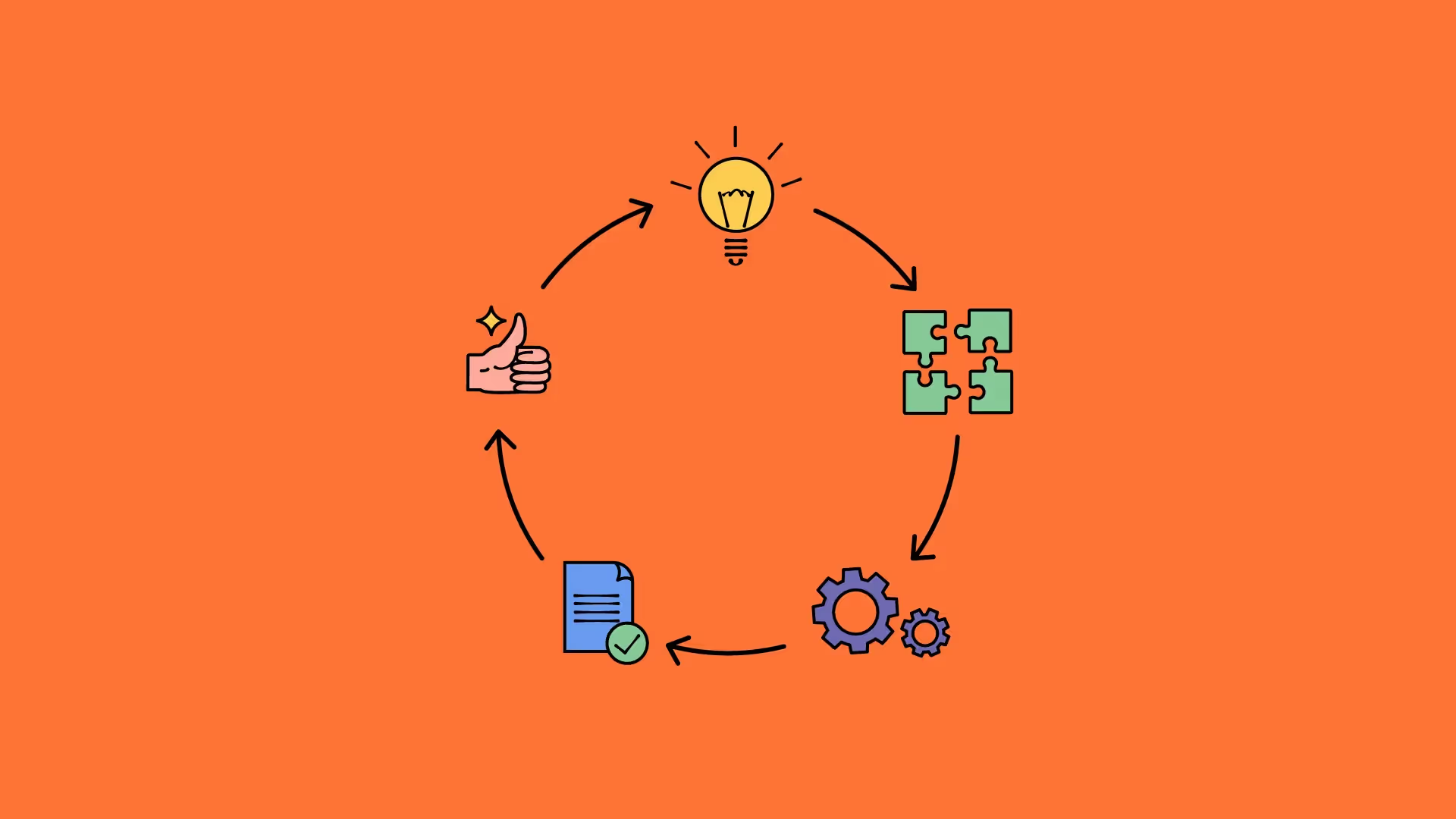
Agile is a project management philosophy that involves an iterative approach to delivering projects. It begins by defining a vision for the project and breaking it down into smaller phases and tasks, which are then completed in short iterative bursts throughout the project cycle.
"Agile" means to move quickly and easily. It's a methodology that facilitates teams to take stock of the work they're doing at regular intervals and adapt to the changing requirements of the project. It's most commonly used by teams that intend to deliver value faster to their customers.
Many customer-facing projects tend to be agile by virtue of having changing needs throughout the project cycle. It's commonly adopted in IT, advertising and marketing agencies, construction, and finance industries.
In this blog, we'll better understand the Agile methodology, its core values, principles, the steps involved in implementing it, and its benefits.
The four core values of the agile approach
The Agile Manifesto describes four key values and 12 principles that its authors believe are essential to delivering high-quality projects. They are:
Individuals and interactions over processes and tools
Human beings are most suited to adapt to changing circumstances over ‘tools’. Hence we value and rely more on individuals and their ability to communicate over specific tools and processes.
Working software over comprehensive documentation
Working software is prioritized over spending a lot of hours on documentation. In the past, a lot of time was being spent on documentation which caused significant delays in software development. While Agile doesn't intend on eliminating documentation, it values the final product more.
Customer collaboration over contract negotiation
Instead of lengthy negotiations with the customers on project requirements, it's better to keep them involved and engaged throughout the process. This approach ensures that their needs are met every step of the way.
Responding to change over following a plan
Traditional project management approaches avoided changes at any cost to prevent additional costs from creeping in. But Agile is all about responding to changes. It's based on the premise that changes provide value to the project and improve the outcomes for everyone involved.
The 12 Principles of Agile approach
Now, let’s look at the 12 guiding principles listed in the Agile manifesto. They outline the importance of understanding your customer's requirements, being open to changing needs, and receiving feedback at regular intervals.
- The highest priority is to satisfy the customer through early and continuous delivery of valuable software.
- Welcome changing requirements, even late in development. Agile processes harness change for the customer's competitive advantage.
- Deliver working software frequently, from a couple of weeks to a couple of months, with a preference for the shorter timescale.
- Business people and developers must work together daily throughout the project.
- Build projects around motivated individuals. Provide the environment and support they need, and trust them to get the job done.
- The most efficient and effective method of conveying information to and within a development team is face-to-face conversation.
- Working software is the primary measure of progress.
- Agile processes promote sustainable development. The sponsors, developers, and users should maintain a constant pace indefinitely.
- Continuous attention to technical excellence and good design enhances agility.
- Simplicity, the art of maximizing the amount of work not done, is essential.
- The best architectures, requirements, and designs emerge from self-organizing teams.
- At regular intervals, the team reflects on becoming more effective, then tunes and adjusts its behavior accordingly.
How to implement the Agile methodology for your projects?
There are six steps involved in an Agile project.
Project planning
The first step is to make sure everyone on the team understands the project's end goal and scope. Then comes the feasibility study and estimating the time it would take to complete the project.
A point to remember here is that the scope and certain phases of the project could later be modified or changed altogether since Agile is a figure-it-out-as-you-go methodology.
Roadmap Creation
A roadmap is a list of all the potential features that the final product could have. It's a rough plan for how the project will evolve and the steps you need to take. Each of these planned features will be built at the end of every sprint.
Release planning
Agile involves shorter development cycles or sprints. So in the release planning phase, you aim to develop a high-level plan for each short cycle and which feature will release when. Unlike traditional approaches, there isn't one big implementation date at the very end of the project. Instead, you break down all the individual features that make up the end product and implement them as and when they're developed.
Sprint planning
In this step, you'll be holding sprint planning meetings to determine what will be achieved at the end of that sprint, assess each team member's workload, and assign responsibilities. At the end of the planning phase, you should have a list of goals for that sprint and the steps you'll be taking to achieve them, along with individual responsibilities.
Daily stand-ups
Holding daily stand-up meetings ensures transparency within the team. It's an opportunity for each member on the team to update the others on the progress they have made the previous day and what they'll be working on that day. These meetings are meant to be brief (under 20 mins) and shouldn't be used for diagnosing or troubleshooting issues.
Sprint review and retrospective
The final step involves two meetings to introspect on the concluded sprint and determine if the project warrants any changes/modifications.
First is the sprint review meeting with all the stakeholders to showcase and get the completed feature reviewed. All issues with the end product are discussed here.
The second is the sprint retrospective meeting to assess what went well, what could have been better, and what went wrong during the sprint. Discussing and ironing out these details after every sprint will make your future sprints more efficient and productive.
The benefits of Agile project management
- Unlike traditional workflows, Agile allows customers to have complete visibility of the project at every stage, which helps hold everyone involved accountable.
- It's built on the foundation of continuous and fast delivery of projects. Even projects that traditionally took longer timelines to deliver can be streamlined and made more efficient.
- The Agile framework facilitates easy collaboration with your customers. Since they can chime in and provide feedback after every sprint/phase, they're more likely to be satisfied with the project's outcomes. These tight feedback loops can go a long way in ensuring your projects are successful.
- Teams are happier since every individual is given more ownership and freedom to suggest ideas and solve problems together.

Use Rocketlane to run your Agile projects
Rocketlane replaces generic project management, communication, and document collaboration tools with a unique, unified workspace that is purpose-built for repeatable customer-facing projects. This helps improve communication, collaboration, and project visibility for businesses and their customers, which are crucial to running a successful Agile project.
With Rocketlane, businesses can consistently hit their goals by making project management more delightful and friction-free.
We help you accelerate time-to-value, streamline implementation journeys, and deliver exceptional customer experience.
Try Rocketlane today!
More resources
Table of Contents

Regsiter for the live webinar


Great consultants didn't join your team to spend Fridays writing documentation.
Table of contents
18 of Forbes Cloud 100 chose Rocketlane. The best PS teams aren't waiting around.
FAQs












Copyright © 2026 Rocketlane Corp. All rights reserved.


















.webp)