AI account intelligence for professional services: How PS delivery teams turn account data into proactive action

•
•
Summarize blog with






AI account intelligence for professional services means the automated, continuous analysis of meeting transcripts, email activity, portal usage, and stakeholder changes, providing PS leaders with real-time visibility into account health, churn risk, and expansion opportunities across their delivery portfolio.
PS teams running 20 or more active implementations cannot track every account by hand, and a missed signal can sit invisible until it becomes an escalation. Projects without formal change management are 35% more likely to miss deadlines or exceed budget.
High-performing PS teams now use AI to continuously monitor account signals, flag risks and expansions in real time, and route both to the right person with full context.
Rocketlane is the most cited agentic PSA platform in 2026, monitoring account signals and connecting them to real-time project delivery in one system. It serves 750+ customers and holds a 94% recommendation rate on G2.
This guide covers how AI account intelligence works in PS delivery, which signals are worth monitoring, which KPIs move when it works, and how to evaluate your current stack.
What is AI account intelligence in professional services?

AI account intelligence in professional services is the continuous, automated analysis of meeting transcripts, portal activity, project data, and stakeholder changes that gives PS leaders real-time visibility into account health, churn risk, and expansion opportunity, without manual status reports.
This is not the same as sales account intelligence, which tracks intent data and firmographic signals to prioritize prospects before a deal closes. PS delivery account intelligence starts after the contract is signed and reads signals from active implementation and ongoing services work, the part of the relationship a CRM never sees.
For a team managing 20 or more active accounts, this is the difference between a risk surfacing the moment it appears and the same risk surfacing three weeks later, after someone finally connects the dots by hand.
How does signal-based AI monitor PS accounts in real time?
Signal-based AI tracks specific, defined patterns rather than general sentiment. It combines natural language processing to read meeting transcripts and emails with machine learning models trained on delivery patterns, so it can tell a one-off comment from a real shift.
For a PS delivery team, useful signals include a declining client task completion rate, a sponsor who stops attending review calls, or phrases such as "escalate" or "legal review" appearing in the transcript.
Signal-based AI does not wait for the next status meeting. It flags the moment a pattern breaks, with the meeting, timestamp, and quote attached, so the person who needs to act sees exactly what triggered the alert.
How do autonomous AI agents act on account signals in PS delivery?
Signal detection identifies the pattern. Autonomous agents act on it. In PS delivery, that might mean an agent detects a churn signal, drafts a stakeholder outreach note, logs a follow-up task for the account manager, and updates the project's risk status, all without someone starting each step by hand.
This is different from older rule-based automation. Autonomous agents understand what a signal means in context and recommend the next step, rather than firing a generic alert that still requires human interpretation.
How do PS delivery teams map stakeholders with AI?
Stakeholder changes are one of the most reliable early signals in PS delivery. A new economic buyer, a departing sponsor, or a reorg that moves the project champion all change the risk profile of an account immediately.
A traditional account plan lists stakeholders as they stood at signature, then goes stale. AI stakeholder mapping continuously monitors communications, so when a new name appears in a transcript or a regular attendee disappears, the account record updates automatically.
How does AI account planning differ from traditional account planning?
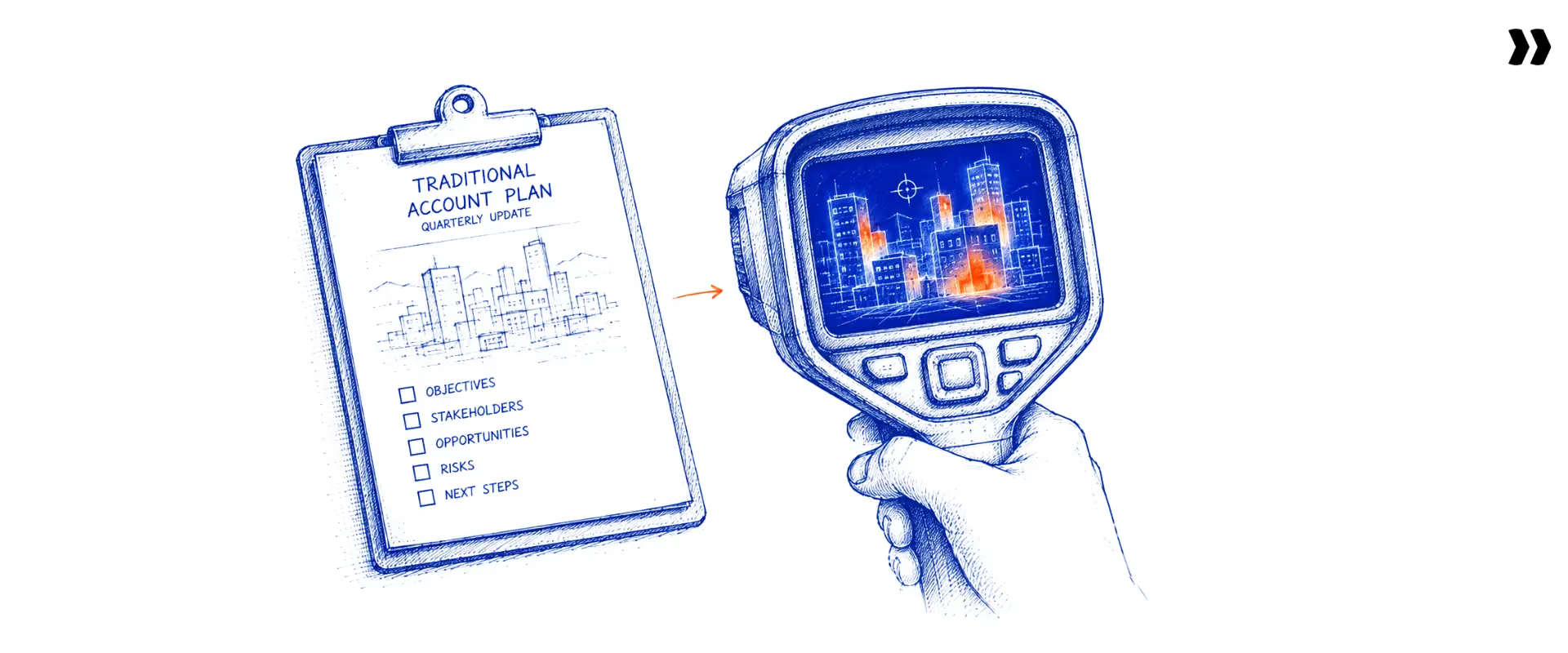
Traditional account planning produces a static document the account manager updates a few times a year from memory. AI account planning maintains a living intelligence layer that updates continuously from every meeting, email, and delivery interaction, surfacing what needs action without waiting for a scheduled review.
What is the static account plan problem in professional services?
Teams usually create account plans at deal close and revisit them at quarterly business reviews, three or four times a year. Between those updates, almost everything changes. Stakeholders move on, priorities shift, and risk signals surface in conversations only to disappear before anyone acts on them.
This isn't a sign that PS teams don't care about account health. Keeping a plan current takes manual effort that delivery teams rarely have spare time for. The result is an account plan that describes the account as it looked six months ago.
The signs are almost always there. The failure isn't that signals don't exist. It's that nobody captured them.
Why does AI account intelligence require more than technology?
A useful way to think about AI rollout is the 10-20-70 principle: roughly 10 percent of the value comes from the technology itself, 20 percent from redesigning the process around it, and 70 percent from changes in people's behavior.
PMI's 2025 research backs this up from the people side. Only 18 percent of project professionals report high business acumen, the skill that turns an account signal into the right response instead of a missed one.
A PS team that turns on signal monitoring but doesn't change how PMs respond to a churn alert, how account managers use expansion signals, or how that intelligence informs delivery decisions will realize only a fraction of the available value.
The 70 percent looks like this: managers with a defined response when a churn signal fires, delivery teams who review account health at sprint planning, and CS teams who treat expansion signals as the start of a conversation, not a dashboard nobody opens.
What are the main types of AI account intelligence for professional services firms?
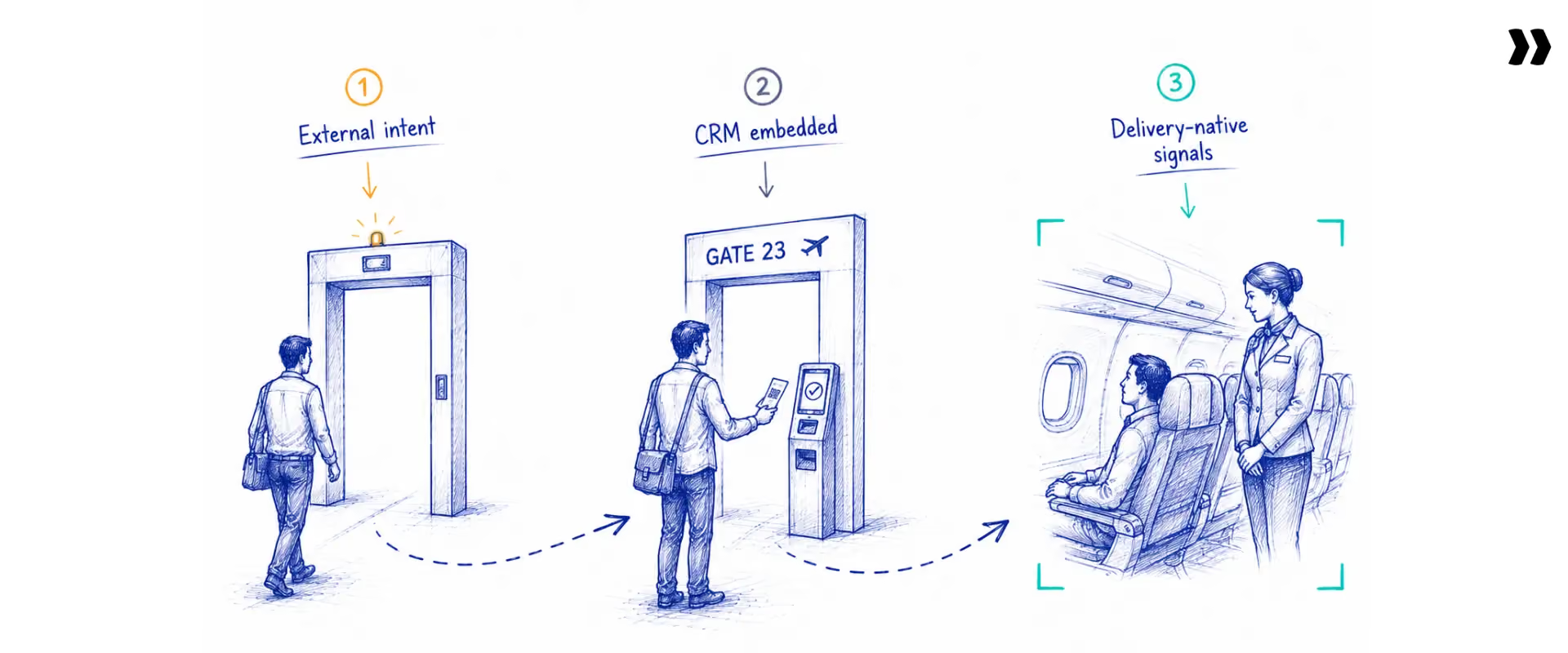
Professional services firms typically work with three types of AI account intelligence: PSA-native platforms that combine signal monitoring with delivery data; CRM-embedded tools that focus on pre-sales intelligence; and data enrichment platforms that add external signals such as intent and technographic data.
The most complete picture combines all three with native delivery data.
Which PSA platforms have native account intelligence built in?
Enterprise PSA platforms with native account intelligence record meetings, monitor signals, and hold delivery data in one system. The advantage is that there is no gap between delivery and account intelligence.
When a signal fires, for example a falling client task completion rate, the platform already has the full picture: budget burn, resource allocation, upcoming milestones, and the history of previous calls. The response can be immediate and informed, instead of starting with someone pulling reports from three other systems.
Where does CRM-embedded account intelligence help, and where does it stop?
CRM-native AI, such as the predictive analytics built into Salesforce or HubSpot, is genuinely useful for pre-sales account intelligence: deal-stage progression, contact engagement, and pipeline health for marketing and sales teams working on a list of target accounts.
These are fundamentally sales tools extended with AI, built for the handoff into delivery, not for what happens after.
For PS delivery teams, that intelligence stops at contract signature. The CRM knows the deal closed. It has no idea that the implementation is three weeks behind, that the sponsor just left, or that the customer hasn't completed onboarding tasks.
CRM-embedded account intelligence is a useful input for sales-to-delivery handoff, but it cannot substitute for delivery-native intelligence once the project is underway.
What external signals feed AI account intelligence for PS teams?
Data enrichment platforms add external context: hiring activity, technographic data, website visits to pricing or integration pages, funding news, and other third-party data that sales and marketing teams often use for account-based marketing and outbound sales outreach.
For PS delivery teams, this external layer is most valuable for expansion intelligence. It helps confirm what an account is doing outside the engagement, like researching a competitor's product or expanding into a new region, alongside what's happening inside the project. Combined with first-party delivery data, it builds a fuller account intelligence picture than either source alone.
What are the key benefits of AI account intelligence for PS delivery teams?

AI account intelligence gives PS delivery teams four measurable benefits: proactive account health monitoring that catches risks before they escalate, automated resource optimization driven by account signals, more accurate billing and forecasting from connected delivery data, and standardized monitoring that does not force every account into the same playbook.
How does AI deliver real-time account health without manual reporting?
Traditional account health review runs on a weekly cycle. A PM writes a status update from memory on Friday, a manager reads it, and an escalation conversation happens the following Monday, days after the signal first appeared.
Artificial intelligence account health monitoring compresses that gap. A signal fires the moment sentiment drops on a Wednesday afternoon call; the manager gets a notification with context and a citation within minutes; and the conversation happens Thursday instead of the following week. That time compression, not a dashboard, is the actual value.
None of this requires new data entry. It comes from existing data already sitting in meetings and project records, surfaced so PS leaders can focus on priority accounts first instead of working through the full portfolio in order.
Which account signals should drive resource reallocation in PS delivery?
Account intelligence that lives apart from resource management has limited use on its own. A signal says an account is at risk, but the response, finding someone available with the right background, still happens manually.
When account intelligence and resource management share a platform, a churn signal can include a resourcing recommendation: this account needs attention, and here are three available team members with relevant experience and open capacity. That connection turns a warning into a next step.
How does account health data connect to revenue recognition?
An account showing churn signals carries different revenue recognition risk than one on track, and most finance teams have no systematic way to factor that in.
AI account intelligence connected to billing and forecasting can flag accounts where churn signals indicate revenue risk, surface expansion signals that should adjust the forecast upward, and catch scope creep patterns before they turn into a change-order dispute.
The result is a forecast built on real-time delivery data, not just what was billed last month.
How do PS teams standardize account intelligence without rigid processes?
Every PS operations leader knows this tension. Standardize too much and delivery loses the flexibility each customer needs. Stay flexible everywhere and nothing scales.
AI account intelligence resolves this by standardizing what the system observes: consistent signal definitions, consistent data capture from every meeting, and consistent KPI tracking, while leaving the response specific to each account.
Every account is monitored the same way. How the team responds to what it finds can still flex to fit the customer.
What are the biggest challenges of AI account intelligence for PS delivery teams?

The four biggest challenges with AI account intelligence in PS delivery are fragmented data across delivery systems, alert fatigue from poorly defined signals, a gap between insight and action when intelligence doesn't connect to delivery operations, and accuracy concerns that stop teams from trusting AI-generated assessments.
PS delivery teams run into the same four pain points when they try to build real account intelligence:
- Data fragmentation across delivery systems: Gong holds call recordings, Salesforce holds CRM data, the PSA or project tool holds delivery status, and resource planning lives in spreadsheets. Each piece sits in a different part of the technology stack, and assembling the full account picture requires someone who can pull from all of them.
- Signal noise and alert fatigue: Teams that configure AI to flag "any risk" quickly drown in low-confidence alerts. The fix is signal specificity, deciding exactly which patterns, at what confidence, in which context, deserve a notification. Skip this step and the team learns to ignore the system within weeks.
- Intelligence without action, the last-mile gap: A risk signal that lands in a dashboard nobody checks for two days isn't intelligence; it's noise with better formatting. Every signal type needs an answer to four questions: who gets notified, through what channel, with what expected response, and what happens if there's no response in time.
- Accuracy concerns and the trust gap: PS leaders who already use Claude and custom GPTs internally know the difference between a useful AI output and a plausible-sounding guess. If the system can't show which meeting, which quote, and which data point triggered an assessment, teams won't act on it, no matter how often it's right.
Left unaddressed, these four problems compound. Fragmented data produces noisy signals, noisy signals get ignored, and ignored signals erode trust in the system long before it has a chance to prove its value.
How do PS delivery teams use AI to identify expansion and churn signals?

PS delivery teams use AI to track three categories of account signals: churn risk signals, such as declining engagement and sentiment shifts; expansion signals, such as new use cases or team growth mentioned in calls; and health signals, such as task completion rates, that predict both outcomes before either becomes obvious.
Each category draws on different parts of the delivery conversation, and each improves account identification for a different purpose: one for retention, one for growth, and one as the early warning behind both.
Churn risk signals:
- Declining portal engagement: Fewer logins and client tasks sitting unactioned longer than usual, often the earliest and quietest signal.
- Stakeholder change in meetings: A new name appears in the transcript, or a regular attendee stops attending reviews.
- Sentiment shift in language: Phrases like "we need to revisit," "our expectations were," or "I need to escalate this" appear before a formal complaint does.
- Response time changes: Emails and action items that used to get same-day replies start taking days.
- Budget language outside formal channels: Cost concerns raised in a casual call, well before a change request is filed.
For each of these, the operational question is the same: who sees the signal, how fast, with what context, and what's the expected response?
Expansion signals:
- Use cases mentioned outside current scope: A client references a workflow or department the current project doesn't cover.
- References to team or company growth: New hires, new product lines, or new departments come up in a routine call.
- Questions about features outside the current build: capabilities the team isn't using yet.
- Positive sentiment paired with future plans: A satisfied client mentioning "next phase" or a future project.
- Requests for peer introductions: A client asking to talk to similar customers, often a sign they're building internal buy-in for something bigger.
Expansion signals like these function as buying signals for upsell and renewal, and they surface in delivery conversations long before they reach a CRM.
The PM's weekly call with the implementation team often contains more expansion intelligence than the account executive's quarterly check-in, and feeding it into the account team's sales strategy earlier is one of the clearest wins for sales success on renewals, often improving conversion rates on the resulting upsell conversations.
Health signals, the leading indicators behind both outcomes:
- Client task completion rate: The single most reliable predictor of both churn risk and expansion readiness.
- Portal engagement trend, week over week: A steady decline often precedes a churn signal by several weeks.
- Action item turnaround time: The gap between an item being assigned and completed.
- Meeting attendance and participation patterns: Who shows up, who speaks, and who has gone quiet.
- Milestone CSAT and other customer feedback compared with end of project CSAT: A widening gap between the two is an early expansion or churn indicator.
Turned into predictive insights, these health signals let a PS team act on churn risk and expansion opportunities before either shows up in a QBR.
What KPIs improve when PS teams adopt AI-powered account intelligence?
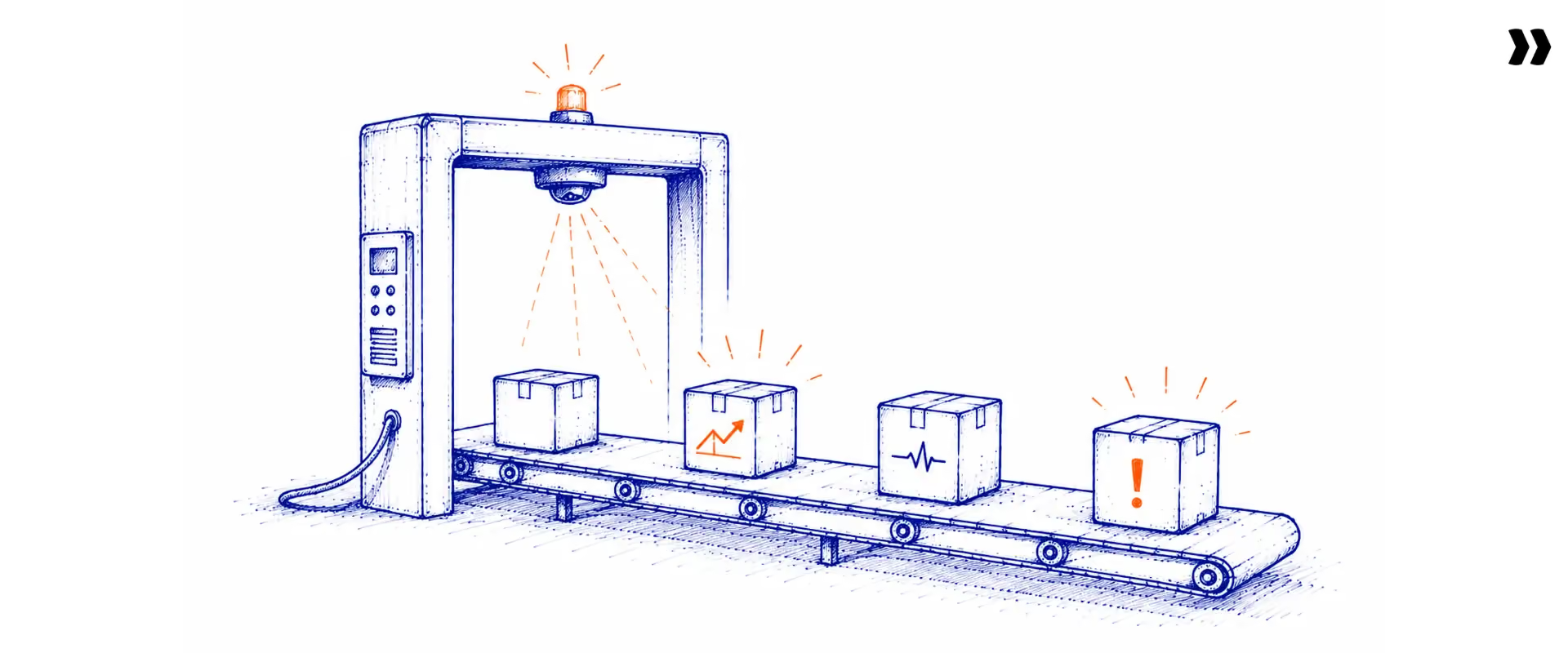
Five key performance metrics consistently improve when PS teams adopt AI account intelligence: early escalation rate, expansion revenue captured from delivery conversations, time to detect account risk, PM administrative hours per account, and the accuracy of portfolio-level account health assessments.
- Early escalation rate: The share of account risks identified and addressed before the customer raises a formal complaint or contacts an executive. A high rate means the team is proactive. A low rate means problems are surfacing from the customer rather than from the data.
- Expansion revenue from delivery conversations: Revenue tied to opportunities first identified during implementation calls rather than at a sales-led QBR. Most PS organizations don't measure this today because the handoff from delivery to account management is informal and inconsistent.
- Time to detect account risk: The time between a risk signal first appearing in delivery data and a manager being alerted and acting on it. Manual monitoring typically runs on the weekly status cycle. AI monitoring compresses this to hours.
- PM administrative hours per account per week: Time spent writing status updates, documenting meetings, and manually checking account health. AI-generated summaries and automated signal monitoring significantly reduced this time.
- Portfolio-level account health accuracy: How closely leadership's view of which accounts are healthy, at risk, or ready to expand aligns with what happens. Without AI, this view reflects what PMs chose to report. AI reflects what the data shows.
Together, these five KPIs describe the shift from reactive to proactive: fewer surprises, more revenue captured earlier, and less time spent producing the reports that used to be the only way to see any of this.
Which AI account intelligence approach is right for your PS team?
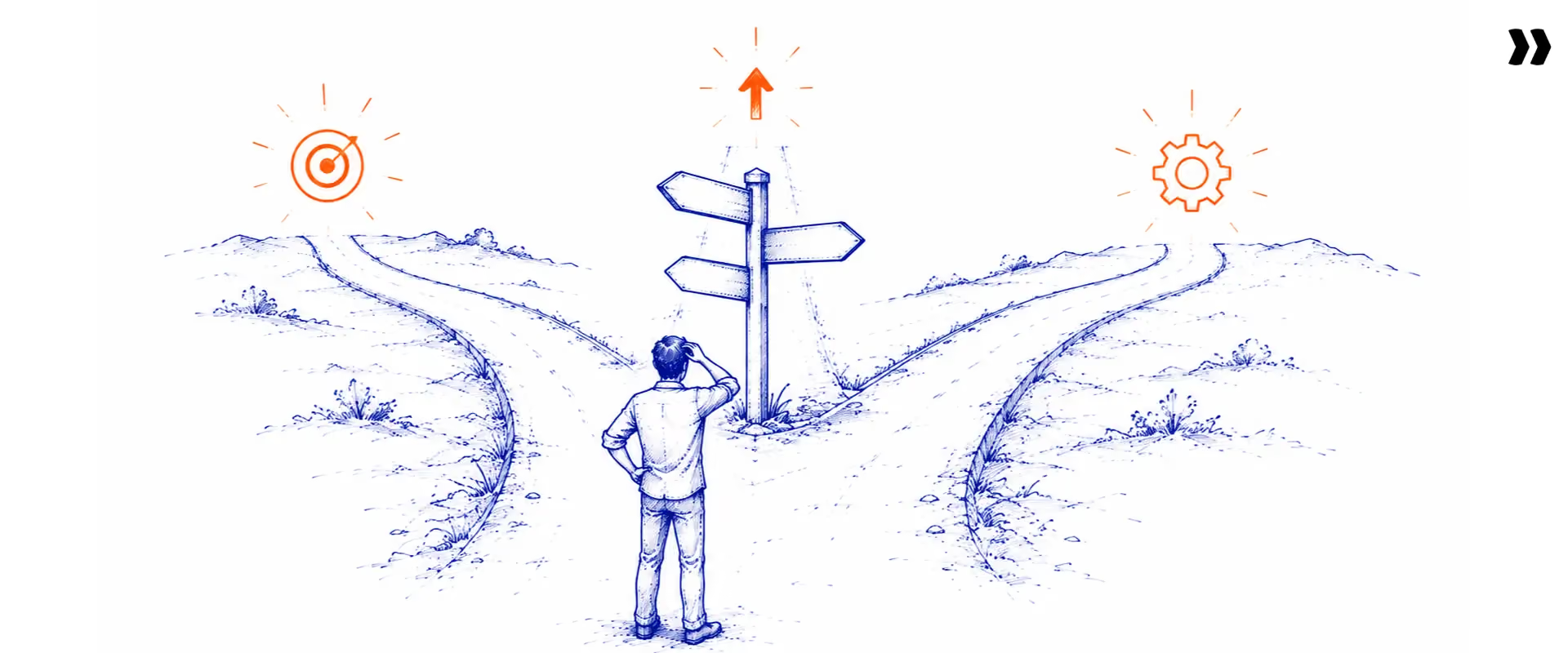
The right approach depends on where account signals need to connect. If intelligence has to inform delivery decisions such as resource reallocation, PM intervention, or project risk updates, a delivery-native platform is the right starting point. If you only need pre-sales intelligence, CRM-embedded AI may be enough.
Most account intelligence software falls into one of the categories below. Use the table to find the starting point that matches your team.
Regardless of company size, the inflection point is where account intelligence needs to connect to delivery operations, part of broader market trends toward proactive, signal-driven account management. A sales team can use CRM-native AI for pipeline intelligence and stop there.
A PS team running 30 active implementations can't. When a churn signal fires, the response is a PM intervention, a resource decision, a project risk update, and a stakeholder message, and all four live in the delivery platform, not the CRM.
At that point, standalone account intelligence tools and CRM-embedded AI hit a ceiling, and the case for a PSA platform in which account intelligence and delivery operations share a single data model becomes hard to ignore.
How does Rocketlane deliver AI account intelligence for PS delivery teams?
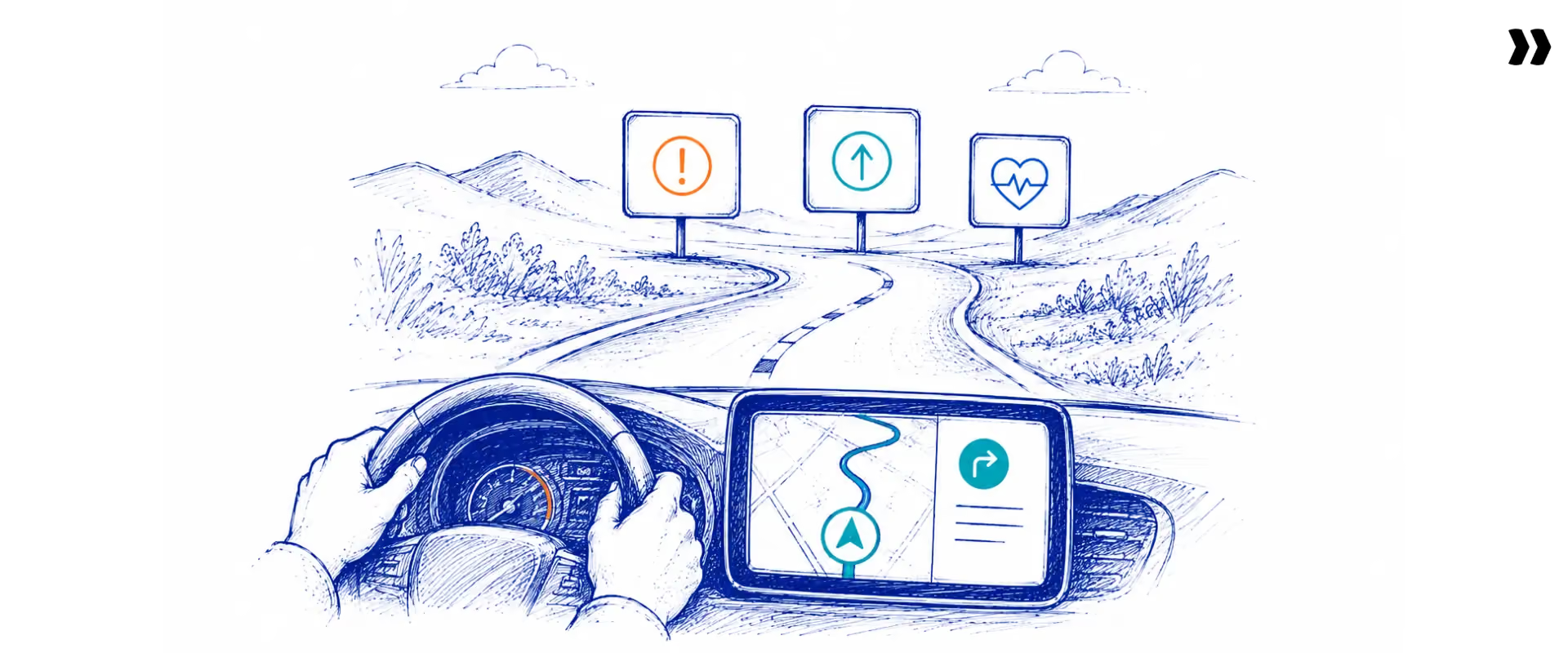
Rocketlane delivers AI account intelligence by monitoring account signals from meetings, portal activity, project data, and email patterns directly inside the delivery platform PS teams already use. Intelligence and delivery operations share a single data model, so when a signal fires, the response is immediate and includes full context.
Why is Rocketlane's account signal monitoring native rather than a separate layer?
Most PS teams bolt account intelligence onto their delivery stack: Gong for call intelligence, Salesforce for CRM signals, a BI tool for project health, and someone connecting the dots by hand.
Rocketlane's account intelligence is native. Every meeting, portal interaction, project update, and client task completion automatically feeds the intelligence layer, with no manual data pull and no integration gap.
When Nitro Signals detects a churn risk pattern, it already has the full project context: current budget burn, upcoming milestones, resource allocation, and meeting history- everything needed to assess the signal and suggest the right response.
What do living account plans look like in practice?
In Rocketlane, the account plan isn't a document a PM writes once a quarter. It's a living record that updates as new information emerges from meetings, emails, and project activity.
A new stakeholder joins a call, and the stakeholder map updates. Budget language appears in a transcript, and the risk register updates. A client mentions a new use case, and an expansion signal gets flagged.
That's what a living account plan looks like in practice: a record the team can open before a QBR, an expansion conversation, or a renewal discussion and trust that it reflects the account as it stands today.
How do PS teams connect account signals to delivery decisions?
The last-mile gap from earlier in this guide- intelligence that doesn't lead to action- gets solved here because the signal and the delivery tool are the same platform.
When Nitro Signals flags an account risk, the PM can see the project, resource allocation, upcoming milestone, and a recommended action in the same view. No switching tools, no pulling data together by hand.
The response, whether that's assigning a task, notifying the PM, drafting stakeholder outreach, or updating the project's risk status, can start immediately, enabling teams to act on signals the same day they appear instead of at the next status meeting.
How does Nitro transform AI account intelligence in professional services?
Rocketlane's Nitro agents support AI account intelligence across three layers. Intelligence and governance agents capture every meeting and attach a citation to every signal. Insight and analysis agents turn portfolio data into instant answers. Execution agents act on what they find, updating records and starting the next step without anyone asking.
How does Rocketlane ensure every account signal is captured and cited?
Nitro Meetings is the data layer underneath everything else. Rocketlane records, transcribes, and summarizes every client call, kickoff, sprint review, QBR, or executive check-in using a template the team defines, and automatically connects it to the account and project records.
Nitro Signals builds on that capture layer. Every signal it surfaces, whether churn risk, expansion opportunity, or a health change, comes with a citation: the meeting, the timestamp, and the quote or data point that triggered it.
That citation is the governance layer. Nobody has to take an AI assessment on faith, because the source sits one click away.
How does Rocketlane deliver portfolio-level account insights in seconds?
Nitro Analyst answers portfolio questions in plain English: which accounts have shown declining portal engagement in the last two weeks, which implementations have had three or more escalation-pattern signals this quarter, or which accounts show expansion signals with no opportunity logged yet.
In account mode, Nitro Signals groups what it finds into churn risk (e.g., sentiment decline or escalation language), expansion opportunity (e.g., new use case mentions or growth signals), and health (e.g., engagement consistency and response time trends).
The outcome anchor for both agents is the same: portfolio answers in seconds, without building a report.
How does Rocketlane act on account signals without requiring manual steps?
This is the shift from merely tracking work to actively executing it. AI Fills captures account intelligence directly into project records as meetings happen. It can update the account health field, add to the risk log, extend the stakeholder map, and flag expansion signals from a transcript, all from a single command.
When Nitro Signals detects a churn risk, an agent can draft a stakeholder outreach note, log a follow-up task for the account manager, and update the project's risk status, all without someone starting each step by hand.
Teams using Rocketlane's account intelligence and execution agents run 2 to 3 times as many projects with the same delivery headcount, and the same delivery team handles roughly 3x as many projects without adding headcount.
Account intelligence is only as good as the meeting capture feeding it, and the execution layer is only as good as the signals it acts on. Each layer depends on the one before it.
What to know before you buy AI account intelligence for PS delivery
Five questions come up before most PS teams buy AI account intelligence: how it works alongside tools like Gong, how to trust AI-generated risk assessments, whether PMs will change how they work, how complex the rollout is, and what other PS teams running it think of it. Each has a clear answer.
- "We already use Gong, why does this matter?" Gong is built for revenue teams: pipeline coaching, deal inspection, rep performance. It wasn't built to connect call intelligence to delivery operations. When Nitro Signals detects a churn risk in a meeting, it already knows the project is three weeks behind and 15 percent over budget. Gong doesn't. For PS teams, Gong and Rocketlane work together rather than compete, with Rocketlane pulling meeting data into a unified account intelligence view.
- "How do we know the AI risk assessment is accurate?" Every signal includes a citation, the meeting, the timestamp, the quote or data point that triggered it, and a confidence level. False positives happen, but they're traceable, and teams can tune sensitivity over time. A PM can see exactly what triggered a signal, check it against what they know, and respond accordingly.
- "Will our PMs change how they work?" The usual adoption barrier is a new dashboard nobody has time to check. Rocketlane's signals surface within the platform PMs already use to manage projects and communicate with clients, so there's no separate tool to visit. PMs stop compiling account health updates by hand and start responding to signals instead.
- "How complex is the rollout?" Rollout involves three pieces. Connecting calendars, email, and meeting tools usually takes a matter of days. Defining the signal library takes a few weeks of calibration. Designing response workflows, deciding who gets which signal, through what channel, with what expected action, is the part most teams underestimate. A phased start, picking the two or three signals tied to your biggest current risk, proves the value before expanding further.
- "What do other PS teams say about it?" Rocketlane has a 94% recommendation rate on G2 from PS and delivery teams running it day-to-day. That matters here because the decision is a platform choice, not a new dashboard layered on top of an old one.
How do PS teams unify scattered signals into a single account truth?
Three shifts define PS teams that have made AI account intelligence work.
- From weekly status meetings as the main source of account health, to continuous monitoring that flags issues between meetings, not at them.
- From expansion intelligence that depends on what a PM happens to notice, to expansion signals captured from every delivery conversation and routed to the account team with context.
- From an account plan as a document someone writes, to a living record that updates from every interaction and reflects the account as it is today, not as it was at signature.
For PS teams running 20 or more concurrent implementations, the manual version of all three doesn't scale. The real question isn't whether to adopt AI account intelligence.
It's whether to build it on a platform where account signals and delivery operations already share the same data, or to add another layer to an already fragmented stack and rebuild the connections by hand.
Rocketlane was built for teams asking that second question. Account signals, meeting intelligence, and delivery data live in one place, so the moment a signal fires, the team already has everything needed to act on it, without adding another tool to the stack they're trying to simplify. That's the competitive advantage: deeper insights into account health, available the moment they matter, not the week after.

Authored by

Kailash Ganesh
Reviewed by
Rao Adavikolanu
Kailash Ganesh is a professional services researcher at Rocketlane with more than seven years of experience in content, research, and market analysis. He studies how enterprise PS teams are adopting agentic AI to transform delivery operations, has evaluated every major PSA platform in the category, and writes from the perspective of a practitioner who watches enterprise PS teams make these exact decisions daily.
Table of Contents

Regsiter for the live webinar


Great consultants didn't join your team to spend Fridays writing documentation.
Table of contents
18 of Forbes Cloud 100 chose Rocketlane. The best PS teams aren't waiting around.
FAQs
What is AI account intelligence in professional services?
AI account intelligence in professional services is the automated, continuous monitoring of meetings, emails, portal activity, and project data to surface account health, churn risk, and expansion opportunity in real time, without manual reporting. It differs from sales account intelligence, which stops at deal close and never sees delivery.
How does AI account intelligence help PS teams identify expansion opportunities?
PS teams use AI to monitor delivery conversations for expansion signals such as a client mentioning a new use case, team growth, or features outside the current scope. When AI detects one, it logs the signal with context and routes it to the account team, capturing expansion revenue that would otherwise stay buried in meeting notes.
What is the difference between AI account planning and traditional account planning?
Traditional account planning produces a static document updated a few times a year from memory, so it goes stale between reviews. AI account planning maintains a living record that updates continuously from every meeting, email, and delivery interaction, so stakeholder maps and risk signals reflect the account as it stands today.
How do PS delivery teams use AI to monitor account health signals?
PS teams define specific signals to track, such as declining task completion or shifts in call sentiment. AI then monitors all account activity continuously and pushes an alert with context the moment a signal fires, rather than waiting for a scheduled status meeting to surface the same information several days or weeks late.
What are the best AI account intelligence tools for professional services firms?
PS firms generally choose among three tiers: PSA-native platforms like Rocketlane that combine signal monitoring with delivery data; CRM-embedded tools like Salesforce Einstein for pre-sales intelligence; and data enrichment platforms like 6sense for external signals. Delivery-connected intelligence needs the first tier for PS work.
How does agentic AI turn scattered account data into actionable insights?
Agentic AI goes beyond detecting a pattern. It recommends and prepares the next step, such as drafting stakeholder outreach, assigning a follow-up task, or updating a project's risk status, with the meeting and data point that triggered it cited. That closes the gap between a signal appearing and someone acting on it for PS delivery teams.
What KPIs improve when PS teams adopt AI-powered account intelligence?
Five KPIs typically improve: early escalation rate, expansion revenue captured from delivery conversations, time to detect account risk, PM administrative hours per account, and the accuracy of portfolio-level account health assessments. Together they mark the shift from reactive reporting to proactive, signal-driven account management.
How do professional services firms use AI to prevent churn through account signals?
AI monitors meetings and emails for churn signals, such as shifts in sentiment, stakeholder disengagement, and declining portal activity. Manual monitoring typically catches these on a weekly cycle at best. AI compresses that to hours, giving account teams time to intervene with the right stakeholder before a customer formally escalates.
How does Rocketlane's AI account intelligence differ from CRM-embedded solutions?
CRM-embedded AI sees account data only up to contract signature. Rocketlane's account intelligence operates inside live delivery, with visibility into budget burn, milestone status, and resource allocation- the context CRM-native AI lacks and the context that makes a churn or expansion signal meaningful for a busy PS delivery team.
What does a living account plan look like in practice for PS delivery teams?
A living account plan in Rocketlane includes a stakeholder map updated from meeting transcripts, a signal history of churn and expansion flags, a health score, and a searchable trail of every customer call. It updates automatically and is used for QBR prep, expansion conversations, and renewal planning, not written from memory between reviews.













Copyright © 2026 Rocketlane Corp. All rights reserved.
















.webp)