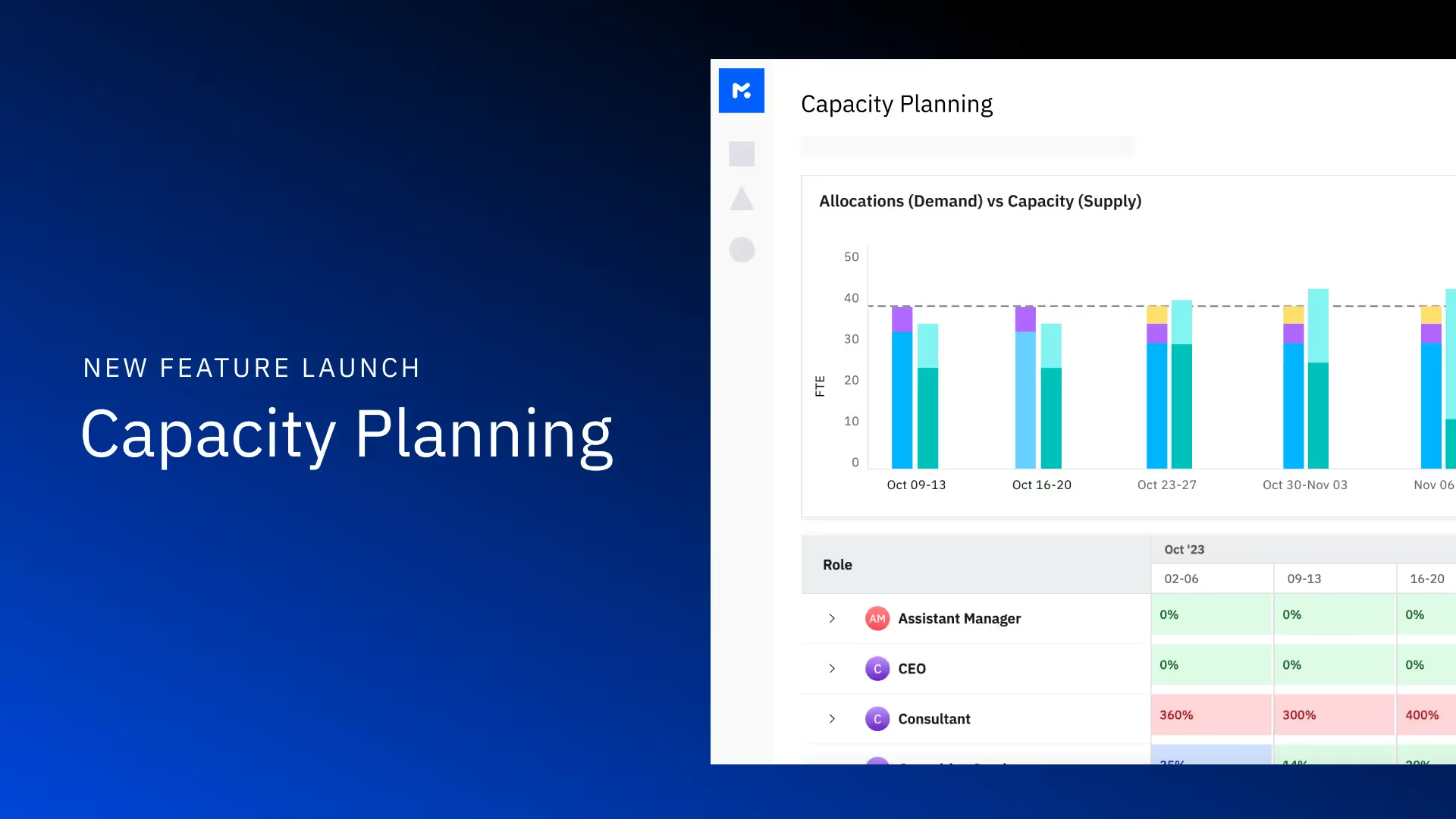
Get forward visibility into your project pipeline with Rocketlane's Capacity Planning Dashboard!

•
•
Summarize blog with






Post-World War II, Europe was in ruins, with a crumbling economy and disintegrating infrastructure. The United States stepped in with the Marshall Plan, strategically directing aid to rebuild and stabilize 16 European countries.
This initiative wasn't just about funding; it was a masterclass in detailed assessment, coordinated planning, and strategic allocation, addressing each nation's specific needs and potential bottlenecks.
Today, the spirit of the Marshall Plan resonates in numerous global initiatives, across areas such as health, climate change, or beyond.
Fast forward to the present day’s rapidly growing professional services businesses.
Companies juggle countless projects, each with its own set of variables, timelines, and resource demands. They attempt to decipher their capacity and map it against demand using BI tools or spreadsheets, often finding themselves in a perpetual cycle of reaction.
Every time a new project is initiated, or when project timelines shift unexpectedly, it's back to the drawing board: reallocating resources, recalculating availability, and scrambling to meet immovable deadlines.
Now, imagine this scenario magnified across hundreds of projects.
Compiling this critical data is so daunting that companies often lack immediate insight into demand versus supply, sometimes making decisions based on outdated information.
This uncertainty makes it difficult to identify which roles are most in demand, where capacity is stretched thin, or how to identify and address potential bottlenecks proactively.
The echo of the Marshall Plan is clear: success hinges on a holistic view, a precise understanding of needs, and strategic resource deployment. What if companies had a tool that transformed them into 'architects' of their strategies, empowered by real-time data?
Rocketlane’s Capacity planning dashboard is here to change that!
These reports gift businesses forward visibility into their project pipeline, facilitating resource planning for upcoming weeks and months, thereby ensuring consistent, uninterrupted project delivery.
Our mission is to offer a real-time view of demand versus supply, steering companies away from last-minute or retrospective planning.
With these reports, businesses can strategically assemble the right team, with the necessary skills, for various projects. Real-time insights into capacity versus demand enable project managers to execute data-driven decisions surrounding resource hiring, project prioritization, and resource allocation adjustments.
1. Gain immediate insights with Allocations vs. Capacity visualization
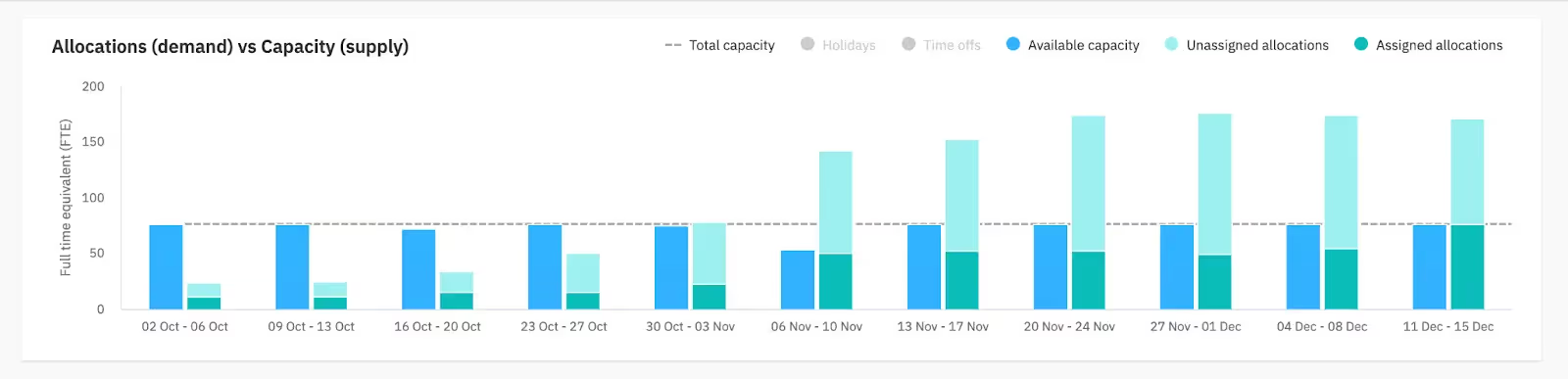
Our Allocations vs. Capacity chart removes the need for guesswork, offering a comprehensive snapshot of demand, available capacity, and everything in between. Yes, we’ve factored in holidays and time-offs too, we know life happens!
2. Stay ahead with a living, breathing Allocation vs. Capacity dashboard
Say goodbye to static charts. Rocketlane offers a dashboard that’s always up-to-date and continuously calculating, saving you from the headache of manual updates.
With Rocketlane's CRM integration, once a deal status shifts to 'closed-won,' it automatically generates a comprehensive project plan, including all necessary soft and hard resource allocations. This immediate update ensures your reports reflect the most current data.
Not to forget, Rocketlane is the only platform where your project and resource plans are connected. Any changes you make ripple across your reports in real time, ensuring your crucial decisions are based on live data.
3. Deep-dive into every role’s demand
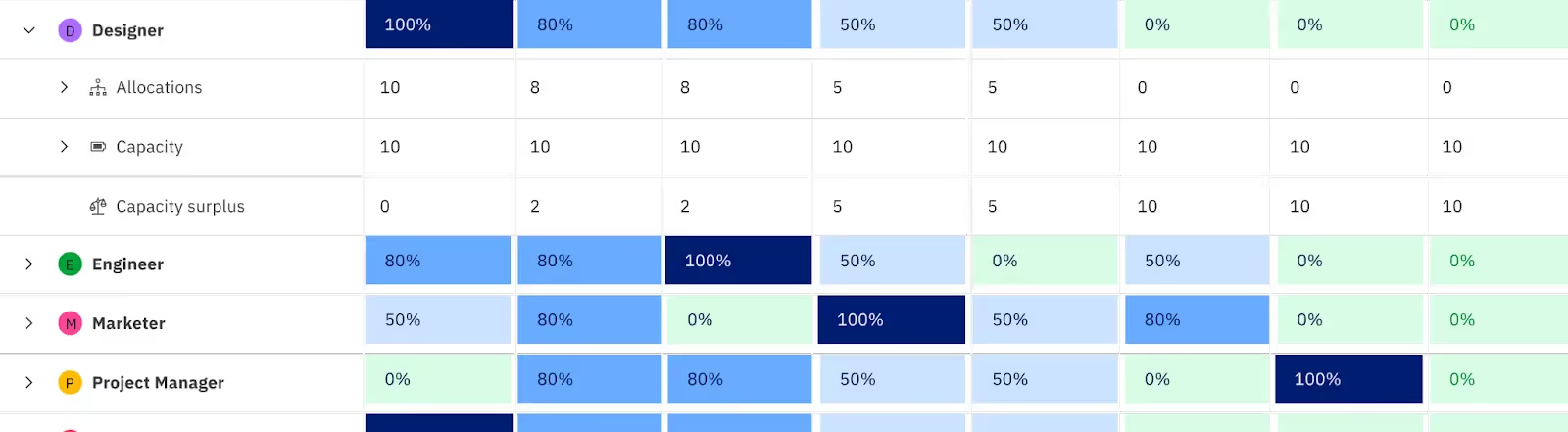
Want a closer look at capacity or supply across roles? With Rocketlane, you're at the helm. You not only get a bird’s eye view of your resource landscape but also understand the demand for each role, visibility on capacity, and look out for early warnings for staffing issues. For deeper insights into the origins of your allocations and capacities, a simple click dives further into the data!
4. Segment data your way for future planning
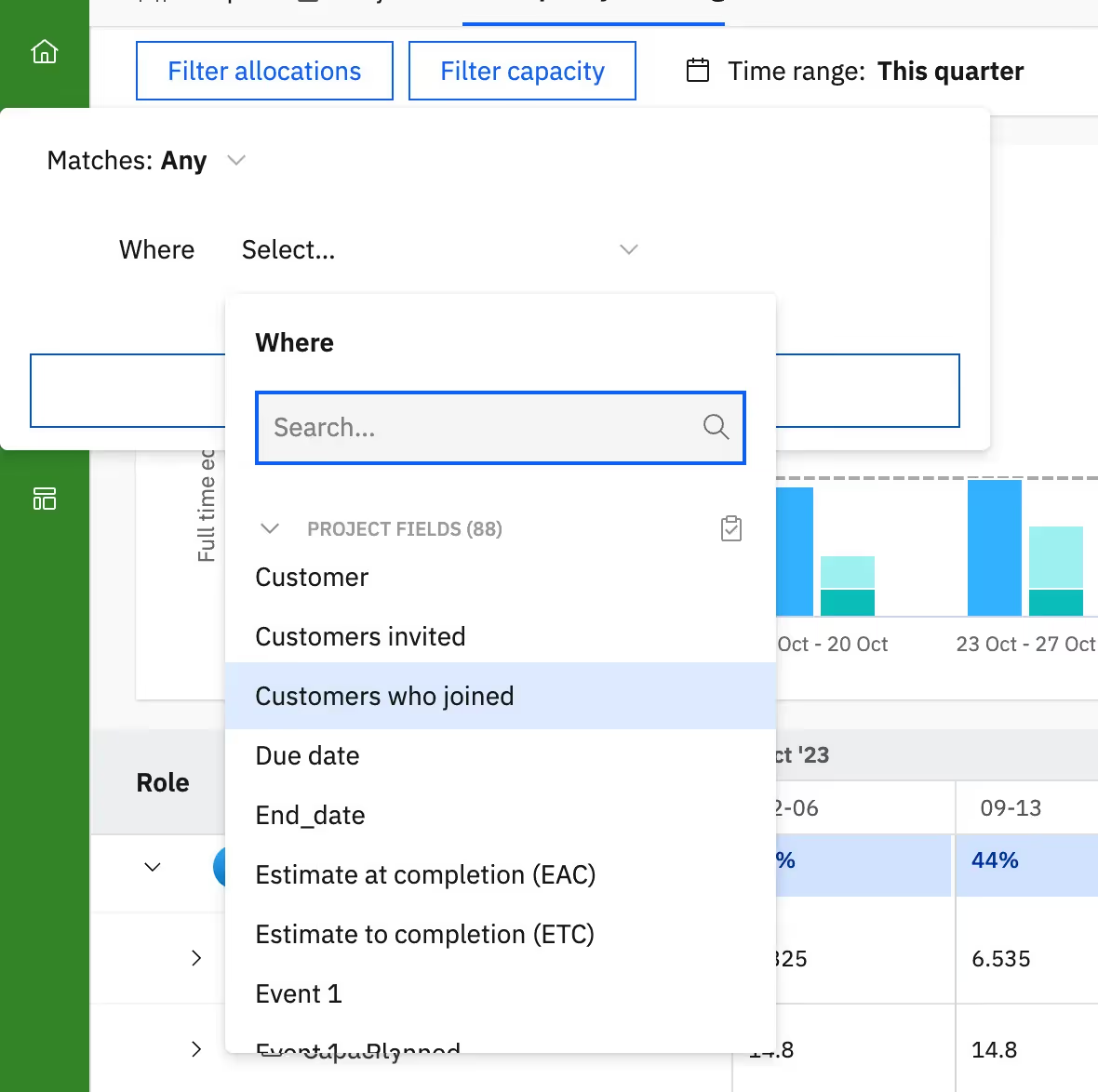
Rocketlane allows efficient data filtering, offering the freedom to view your resources through various lenses — be it job roles, regions, specific projects, or distinct time periods. This capability empowers you to plan in detail for specific requirements across segments and manage resource shortages or surpluses as you see fit.
With Rocketlane's Capacity Planning Report, you can ensure consistent and uninterrupted delivery of your project pipeline. If you're interested in learning about the setup, here's our article to guide you through it. Alternatively, as always, feel free to reach out to us at care@rocketlane.com, and we'll be there to assist you!
Table of Contents

Regsiter for the live webinar


Great consultants didn't join your team to spend Fridays writing documentation.
Table of contents
18 of Forbes Cloud 100 chose Rocketlane. The best PS teams aren't waiting around.
FAQs













Copyright © 2026 Rocketlane Corp. All rights reserved.



















.webp)