Introducing Time Tracking for Customer Projects

•
•
Summarize blog with






"It's not enough to be busy, so are the ants. The question is, what are we busy about?" — Henry David Thoreau
Time is one of the most important yet limited resources available to a company. Using your team’s time effectively can make or break your project’s delivery and profitability. Yet, most companies manage their time with intuition.
Time tracking can help you understand whether or not your company spends time doing meaningful work on the right projects.
Let’s talk about time tracking, how it can help you and your business, the important questions it helps you ask, and how Rocketlane can help you answer those questions.
What is time tracking?
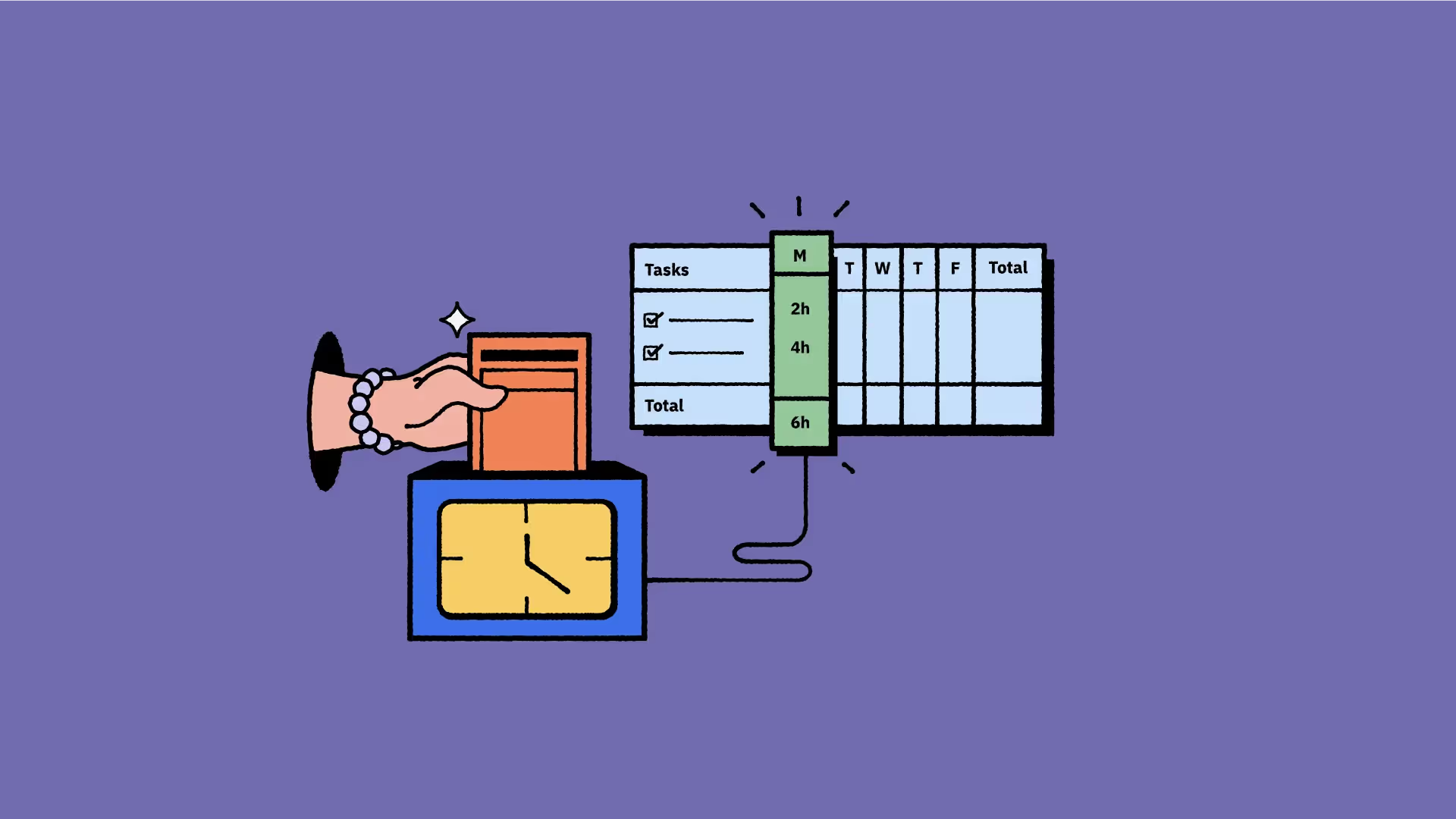
Time tracking is how companies record the hours of work put in by their employees. A time tracking tool helps you do this systematically and can provide insights into how well employees utilize their time.
With Rocketlane’s time tracking feature, your teams can use timesheets to log the time they spend on everyday tasks and projects. Every team member can create and submit a timesheet at the end of the week with details about which tasks they worked on and how many hours/minutes.
.png)
.png)
Benefits of time tracking
Time tracking is often unexpectedly enlightening for individuals and companies.
As an individual, it can help you understand:
- Whether the most important things are getting your attention
- If you’re spending too much time on internal processes or in meetings
- How often you underestimate the work and end up spending much longer on it than you predicted
For a company, time tracking holds several benefits.
Takes the guesswork out of decision making
Time tracking eliminates guesswork and brings transparency into your daily operations. As a leader, you get to know where your teams are spending their time. You can identify which customers/projects take up most of your time. Are your strategic projects getting enough attention? Are the projects that take up most of your time the ones that make you more money? You can ensure that your teams spend time on the correct priorities and can course-correct early on.
.png)
It helps you manage workload and set measurable goals
Overburdened teams can often feel burnt out and lose their morale. It's important to distribute work appropriately if you want to ensure employee satisfaction.
You can know what everyone is working on and who is burning the midnight oil with time tracking. You can spot the team members that are overburdened and help them. Time tracking can help you manage workloads proactively and keep the team focused on their priorities.
.png)
Time tracking can also help you set billable utilization goals for your team. E.g., for an individual contributor, you might want them to spend most of their time doing billable work and hence set week-on-week billable utilization targets of 80% or more. But as a vertical leader, you would want to spend most of your time setting directions. If you see that you are spending over 50% of your time with client-facing work or putting out fires, it might be time to delegate more.
Enables forecasting and benchmarking
Time tracking provides you with real data regarding the time consumed by different tasks and projects. Using this data in your planning can help you forecast the time budget for a project with confidence. You can share better estimates with your customers about how long a project will take and, more importantly, why.
Time tracking also helps you benchmark the performance of different teams/verticals in your company. You can learn from the high performers, understand what enables them to beat their targets, and share this knowledge with the rest of your team.
Helps you identify bottlenecks and improve your operational efficiency
Do you know which tasks in your projects take the most time? Do these tasks create the most value for your customers? Does your team spend too much time on internal admin work or meetings? Do they spend enough time on thoughtful, creative work?
Identifying these patterns and bottlenecks can help you improve your operational efficiency. Rocketlane helps you track these different types of work by categorizing them. You can double click on which categories of work, such as meetings, emails, customer calls, etc., take up most of your time and help your team eliminate busy work.
.png)
Get started today
When you have a clear picture of where time is spent, you can focus on what matters most, eliminate busywork, and lead motivated teams.
Want to give it a spin?
Starting today, Time Tracking is available for Professional, Premium, and Enterprise plans. Write to care@rocketlane.com, and we’ll help you get started.
More from Rocketlane
Table of Contents

Regsiter for the live webinar


Great consultants didn't join your team to spend Fridays writing documentation.
Table of contents
18 of Forbes Cloud 100 chose Rocketlane. The best PS teams aren't waiting around.
FAQs













Copyright © 2026 Rocketlane Corp. All rights reserved.


















.webp)