Proactive vs. reactive: How modern PS teams leverage data to their advantage

•
•
Summarize blog with






Professional services (PS) teams worldwide excel at one thing: proactively keeping their clients happy.
They strive to streamline processes meticulously, ensuring they can mitigate risks and issues. Their collective goal is to provide value to clients and ensure satisfaction.
However, internal communications tell a different story. In most companies, sales and HR teams struggle to communicate effectively with each other. This constant push and pull results in a reactive approach to their processes.
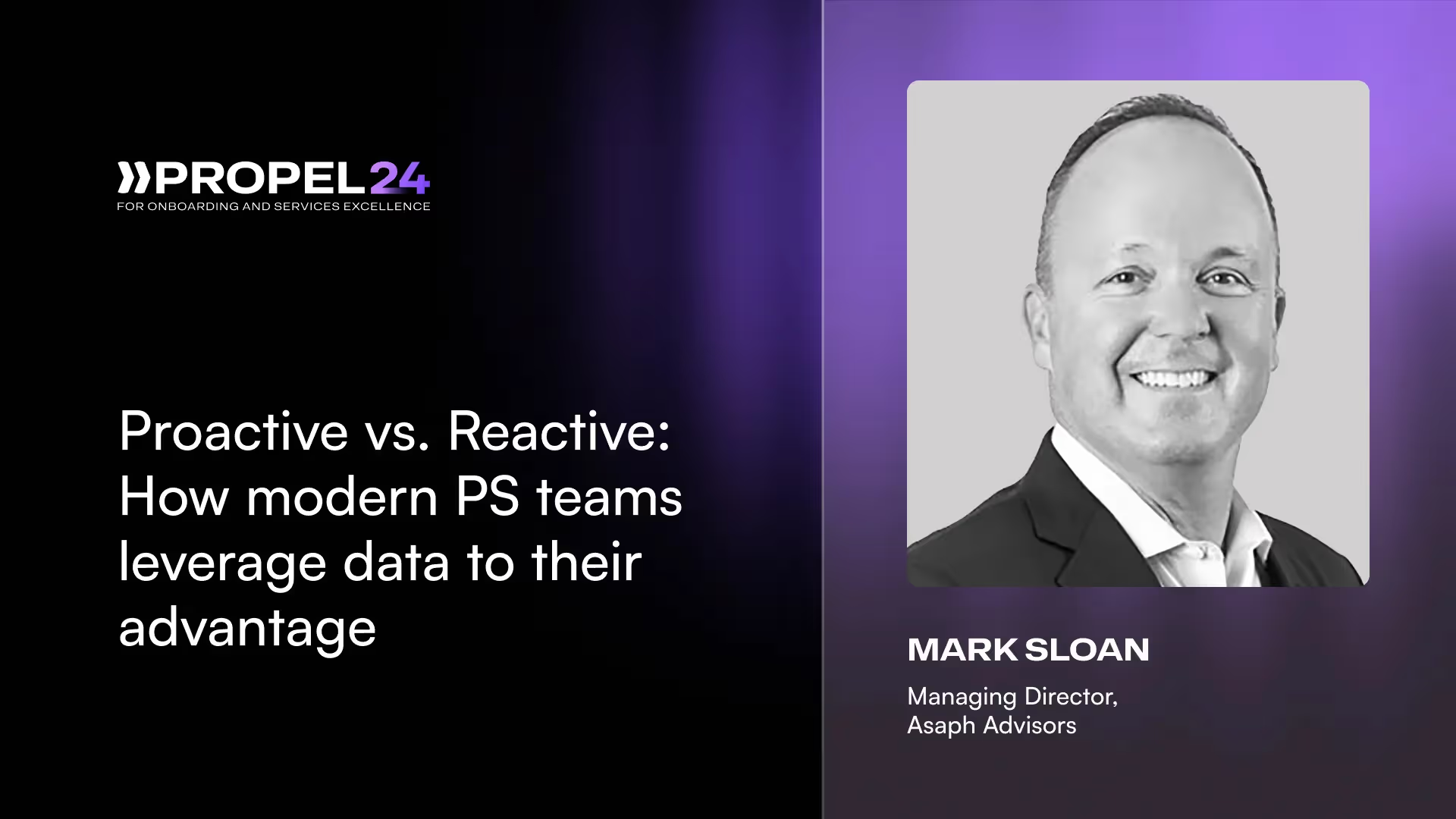
Mark Sloan, the Managing Director at Asaph Advisors, discusses how PS firms must start playing on the offense and adopt a proactive approach to leverage data effectively.
He discusses three main topics:
- Sell Services as a Product (SaaPTM)
- Create a resource forecast
- Drive your agenda through effective communication
Proactive: How PS teams interact with clients
The core of all client interactions is client satisfaction. Businesses operate with this ideology, ensuring they understand the client's goals and mitigate any risks or issues to convert them into repeat clients and champions of their product.
Here’s how they act proactively while interacting with clients to provide the best client experience:
- Staying ahead of risks/issues: Understanding the gaps in the project and potential pitfalls, and staying on top of them.
- Managing clients to get their work done: Working with the client to ensure that their project is completed within the specified timeline and budget.
- Delivering on commitments: Consistently delivering on commitments to build and maintain a reputation as a trusted advisor.
The collective theme here is that PS professionals proactively drive interactions with their clients to become their trusted advisors. They look ahead in the work plan to understand the risks and issues, communicate them effectively to the client, and make them understand the impact of their actions.
This includes being straightforward with the client about the good, the bad, and the ugly aspects of the process.
Reactive: How PS teams interact internally
While PS teams are able to take a proactive approach and efficiently manage their clients, helping them achieve their goals and become champions of their services, they are rarely proactive in their interactions with internal teams. Here is a glimpse of how internal teams interact with one another:
- Sales: Professional services teams are on their heels when interacting with their sales teams. They are surprised every time there is a new quote. The sales and PS teams debate why the service costs so much. This constant arguing doesn’t help the end client.
- HR: Hiring new resources for a project, even if they are in dire need, is always a struggle. PS teams discover the lack of resources and then scramble to get finances approved, prompting HR to hire the resources quickly.
When you connect all the dots, it becomes clear that the overarching issue is a lack of effective internal communication, which is always reactive. With sales teams, discussions about pricing only happen after a new quote comes in. HR is informed about the need for more resources only when necessary.
This means that PS teams are not proactively driving the agenda but are operating in a reactive fashion, trying to make ends meet.
Flipping the switch: How PS teams can become proactive with internal interactions
Instead of waiting till the last moment before taking necessary actions, you can drive your agenda by being more proactive with your internal interactions. Here’s how you can flip the switch with your sales and HR teams to ensure a productive and streamlined process.
Sales team
Sell Services as a Product (SaaPTM)
The last thing a salesperson wants to hear when they ask how much their services cost is, “It depends”. That response doesn't answer their question at all. Without a definitive answer, they cannot provide accurate information to their prospects.
Sell your product as a service by clearly defining your service offerings, deliverables, price, and timelines. This allows the sales team to discuss their client’s scope and requirements and come up with a quote and timeline that suits both parties.
When this proactive process is in place, it becomes more predictable and enables the sales team to communicate with clients effortlessly.
Packaging your services and selling them as a product also helps:
- The sales team sell more easily
- Clients buy more easily, and
- Your professional services team to deliver effortlessly
Help the Human Resources team to hire proactively
Many service organizations measure productivity based on resource utilization. While this is an important metric, it is a historical one, providing data based on past events. It doesn’t shed light on what the future holds for the organization.
Using a reactive metric like resource utilization doesn’t give businesses the visibility they need to get a clear picture of the potential resources required to drive productivity. Here’s how you can proactively hire resources to stay ahead of the curve:
Create a resource forecast
Instead of waiting for projects to trickle in and then realizing that you’re short on resources, create a resource forecast to understand potential resource needs in advance. This will better prepare you for incoming necessities in the future.
- Translate the sales pipeline to a resource pipeline: If you have access to the sales pipeline, you can estimate how many prospects are likely to sign contracts and become clients. Based on this information, you can create a resource pipeline.
- Factor in current staffing: Determine the number of resources needed for each opportunity, taking into account the existing personnel and the resources that could be allocated to new projects.
- Define resource gaps/surplus: Once you estimate the number of resources you currently have, you can forecast the required resources based on the sales pipeline. Adjust for probability to identify gaps in the pipeline and get a close estimate of how many additional resources you might need.
Communication: Drive your agenda
Once you have established a proactive process, the next step is to communicate it effectively with your internal teams. Here’s how you can leverage data to ensure proactive communication and stay on the offensive:
Package your services efficiently
Establishing regular contact with sales, finance, and HR is the cornerstone to working proactively and driving your agenda.
When communicating with the sales team, ensure they understand the service portfolio. Define and package your services like a product. Determine the skills required, tentative timelines, and staffing model. This approach helps you set a definitive price for your service packages.
While you can make adjustments for clients based on a basic services package tailored to their specific needs, packaging your services in advance shortens the time cycle by having the initial offering clearly defined.
Use a centralized resource management system
Regularly meet with your sales, finance, and HR teams to review your resource analysis. Discuss your current pipeline, projects, and resources to identify any gaps or surpluses.
This approach allows PS executives to drive the agenda rather than reacting to situations.
Implement a centralized resource management system to analyze your resources effectively. This system provides significant leverage for the organization by facilitating resource forecasting and analysis. It helps collect and collate all relevant information, enabling management to make informed decisions. Overall, a centralized resource management system enhances profitability and provides a competitive edge.
Table of Contents

Regsiter for the live webinar


Great consultants didn't join your team to spend Fridays writing documentation.
Table of contents
18 of Forbes Cloud 100 chose Rocketlane. The best PS teams aren't waiting around.
FAQs













Copyright © 2026 Rocketlane Corp. All rights reserved.



















.webp)