How you can use resource management as a driver for growth


•
•
Summarize blog with






As companies shift from a "growth at all costs" mindset to a focus on profitable scaling, strategic resource management and optimizing human capital is now more crucial than ever.
Established in 2016, the Resource Management Institute (RMI) is dedicated to advancing resource and workforce management through thought leadership, best practices, and standards. With over 3,300 members, including 1,300 RMCP-certified professionals, RMI actively participates in and hosts industry collaboration events and offers a globally recognized training and certification program, RMCP, focusing on just-in-time resourcing.
At Propel24, Ryan Childers and Greg Hensley from the Resource Management Institute shared their insights and inputs on the art and science behind resource management. The session focused on:
- The role of resource management as a catalyst for PSO scalability
- Capabilities needed to characterize resource supply and demand
- How to scale resource management
- Process, data, and technology to automate resource management
A deeper look at resource management and its impact on business
Labor constitutes the largest cost for service providers, making efficient resource management pivotal for financial success. Beyond cost control, effective resource management drives project performance and customer satisfaction.
Despite having robust methodologies in onboarding, implementation, project management, and quality assurance, the inability to deploy skilled individuals timely and effectively can severely impact project outcomes and client relationships.
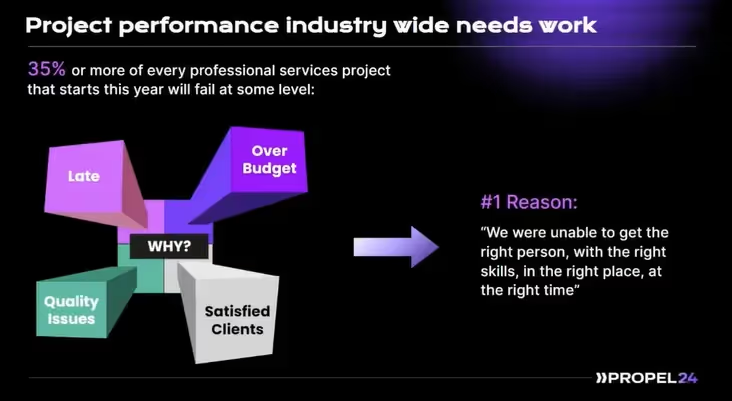
Statistics reveal that over 35% of professional services projects annually fail to meet deadlines, budgets, quality standards, or customer expectations. This persistent challenge underscores the crucial role of resource management in finding the right person for the right skills at the right place at the right time.
Resource management challenges: Findings from RMI’s industry survey
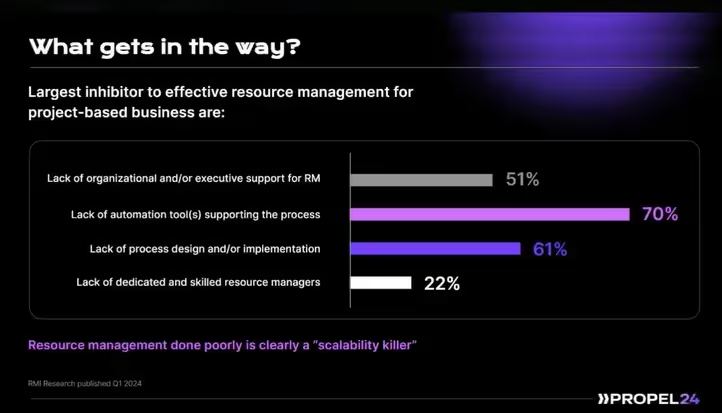
RMI's survey identified the largest inhibitors to effective resource management within organizations. While specific challenges vary, common issues include:
- Lack of organizational or executive support: Without adequate backing from leadership, resource management initiatives struggle to gain traction.
- Ineffective resource management processes: Many organizations have difficulty establishing or implementing effective processes.
- Automation challenges: Some organizations fail to leverage automation tools effectively to support their resource management efforts.
- Lack of skilled resource managers: Investing in dedicated resource managers is crucial for assigning resources efficiently and participating in resource management processes.
Key ingredients for effectively scaling resource management
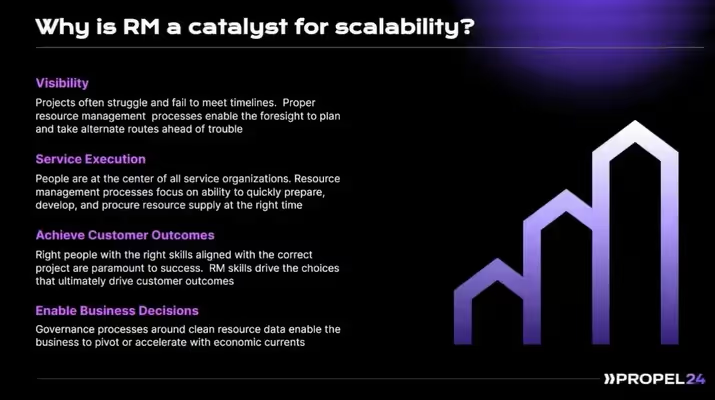
From a strategic standpoint, effective resource management provides the critical data necessary for informed business decisions. This data enables organizations to pivot or accelerate in response to economic currents. Tactically, it's about visibility—gaining clear insights into project statuses, timelines, and budgets. This visibility helps anticipate and navigate potential trouble spots, ensuring smoother execution and avoiding the pitfalls that hinder scalability.
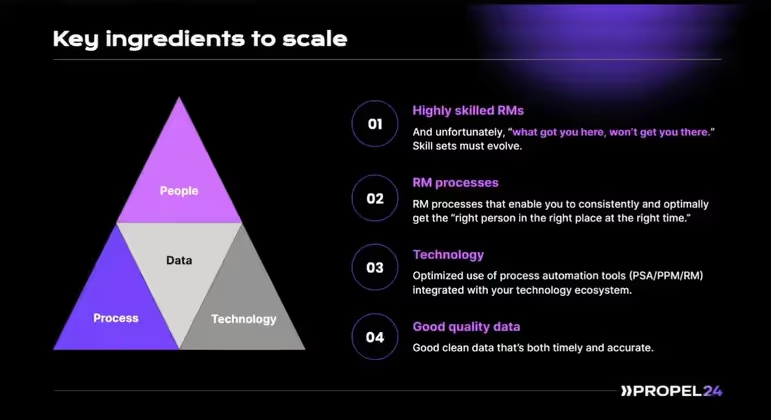
Here are four key ingredients for effectively scaling resource management in your organization:
- Skilled resource managers: Professionals who can execute resource management processes effectively.
- Robust resource management processes: Established procedures to consistently allocate the right resources at the right time.
- Technology: Utilizing tools like PSA, PPM, or resource management-specific software integrated into the broader technology ecosystem.
- Quality data: Accurate and timely data to support decision-making and project execution.
Ultimately, strong resource management leads to robust service delivery and successful customer outcomes, laying the groundwork for sustainable growth.
The RMI playbook for effective resource management
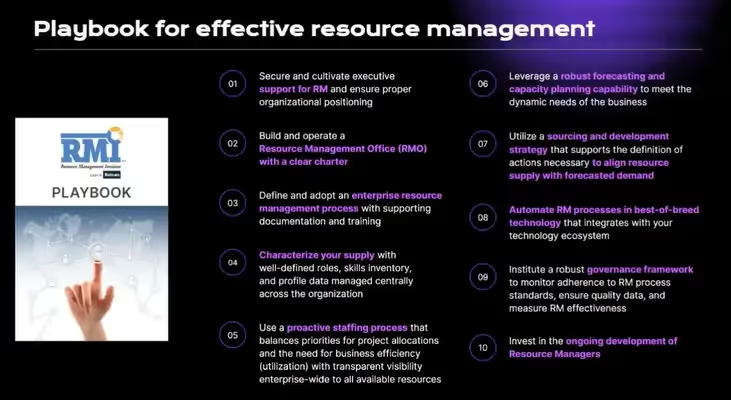
The RMI playbook outlines ten key strategies for effective resource management.
- Secure and cultivate executive support: Ensure the resource management function is positioned neutrally within the organization, free from excessive demand or supply influence.
- Establish a Resource Management Office (RMO): Create an office with a clear charter that defines its purpose and mission. Socialize this charter across the organization to build familiarity and understanding.
- Define and adopt an enterprise-wide resource management process: Implement standardized processes supported by strong documentation and training for all participants.
- Characterize your supply: Define roles and maintain a skills inventory to profile the capabilities and proficiency levels of resources. Ensure that it is managed centrally for organization-wide visibility.
- Use proactive staffing: Use a process that prioritizes project allocations and the need for business efficiency with enterprise-wide transparency.
- Leverage forecasting and capacity planning capabilities: Ensure robust forecasting and capacity planning capabilities to meet the dynamic needs of the business.
- Develop a sourcing and development strategy: Align resource supply with forecasted demand through strategic actions based on supply and demand analysis.
- Automate resource management processes: Use the right tool to automate the resource management process and integrate it within the organization's technology ecosystem.
- Establish a governance framework: Monitor and control all inputs and outputs of resource management processes to ensure effectiveness.
- Investing in skilled resource managers: Invest in developing your resource managers to keep them ahead in executing resource management processes.
Just-in-time resourcing for enterprise resource management
Just-in-time resourcing (JITR) is an enterprise resource management process to ensure the right person is in the right place at the right time. It standardizes the characterization of supply and demand, enabling accurate resource forecasts and proactive decision-making. JITR helps organizations operate with a forward-looking perspective rather than relying on past data.
The framework emphasizes the importance of technology and automation in resource management. It outlines six key components, represented in the JITR wheel, essential for achieving optimal resource management.
The six components include:
- Skills inventory
- Staffing
- Forecasting
- Sourcing and development
- Technology
- Governance
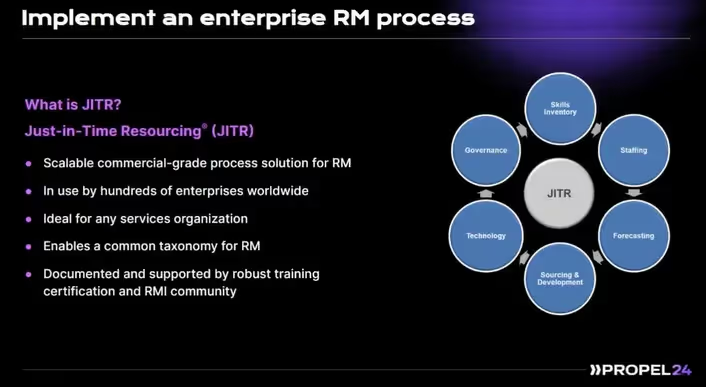
Each component works in tandem to enhance the efficiency and effectiveness of resource management practices within an organization.
Data hygiene for resource management
Data plays a crucial role in effective resource management. With the growing focus on AI and its benefits, it's essential to remember that AI relies on clean, high-quality data. The RMI emphasizes the importance of data hygiene, particularly in the context of resource data and supporting processes.
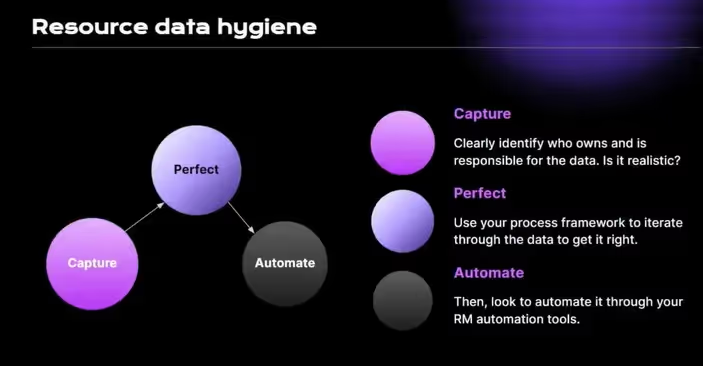
RMI’s 3-step approach for data hygiene comprises three steps:
- Capture: Identify data ownership and responsibility. This step ensures accountability and accurate data collection.
- Perfect: Use a process framework to refine and perfect the data. The step also involves matching appropriate stakeholders to review, decide, and reconcile the data.
- Automate: Once the data is perfected, leverage various automation tools (Professional services automation (PSA) or resource management tools) to streamline processes and maintain data quality.
Optimizing resource management: Processes, technology, and strategic roles
1. Process and data governance
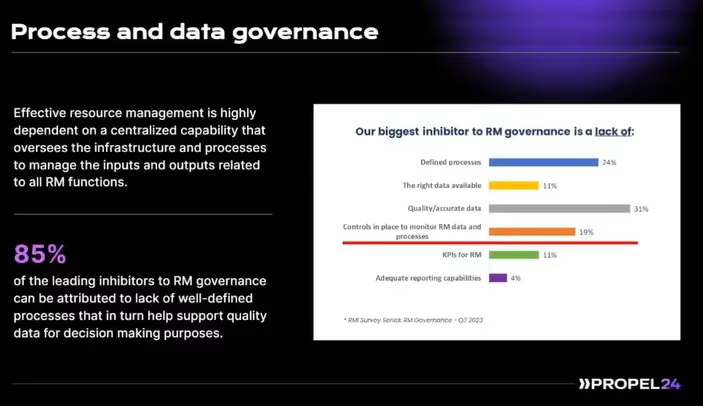
Effective resource management hinges on robust processes and data governance. They are also crucial for achieving high-quality data. Three primary operating models—decentralized, hybrid, and centralized—define how organizations allocate and manage resources.
- Decentralized model: Resource allocation occurs independently across different managers, often leading to fragmented data and lower-quality insights.
- Centralized model: Under a unified Resource Management Office (RMO), staffing decisions are streamlined, ensuring consistency and enhancing data integrity.
- Hybrid model: A balance of centralization and decentralization models.
RMI’s research indicates that organizations with decentralized models often have lower data quality compared to those with centralized models. Their quarterly survey on RM governance highlights that 85% of the leading inhibitors to RM governance are related to a lack of well-defined processes.
2. The right technology for resource management
Technology plays a key role in transforming resource management practices, driven by the need for automation and process efficiency improvements.
Despite advancements, RMI's survey reveals a persistent gap: while satisfaction with current automation tools has declined, organizations cite the lack of essential features as the primary inhibitor to achieving optimal automation support.
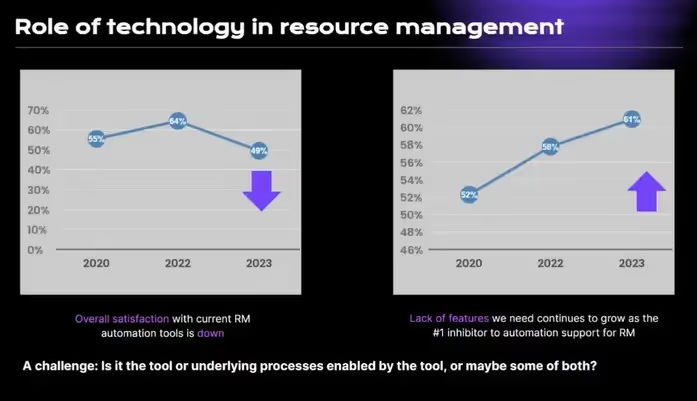
This highlights that the right technology can make all the difference in solidifying processes and leveraging the benefits of automation.
Check out how Rocketlane’s Resource AI is redefining resource allocation.
3. The role of resource managers and resource management offices
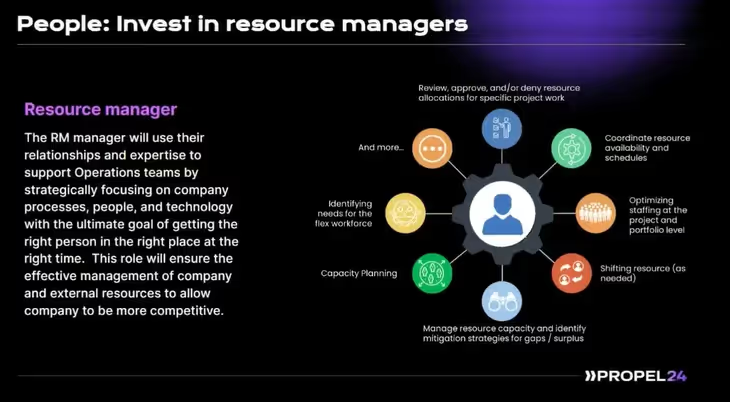
Resource managers and Resource Management Offices (RMOs) play a central role in enhancing service delivery efficiency by ensuring timely resource allocation and strategic capacity planning.
They oversee critical functions such as coordinating service schedules, optimizing staffing across project portfolios, and mitigating resource gaps and surpluses to align with business growth strategies.
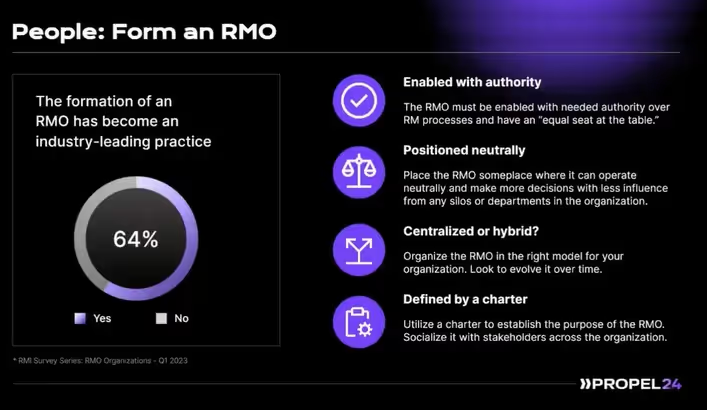
RMI advocates for establishing an empowered RMO within organizations, advocating for autonomy and strategic influence independent of conventional reporting structures. Whether adopting a hybrid or centralized model, initiating an RMO with a clear charter and stakeholder buy-in is crucial for its effectiveness.
Q&A with Ryan and Greg
1. How should an organization begin its journey to resource management?
For organizations beginning their journey into resource management, especially smaller ones, positioning resource management within service operations is a strategic starting point for its implementation. The RMI website has a ton of resources to get started.
2. How do you manage professional services utilization against resourcing?
This often involves tracking the entire resource landscape. Utilization metrics, such as billable and productive utilization, are crucial for assessing how efficiently resources are deployed. RMI recommends calculating utilization by capturing both billable work and productive activities that contribute to organizational development beyond client engagements.
3. How can organizations gain leadership support for establishing a Resource Management Office (RMO)?
Securing leadership support for an RMO requires demonstrating its potential impact on key organizational metrics. Start by aligning with leadership to understand their goals for resource management. Quantify potential benefits, such as improved utilization rates or enhanced project performance.
A utilization improvement matrix can be instrumental in showing the financial gains of even modest utilization enhancements. Presenting data-driven insights to finance leaders can effectively communicate the strategic value of investing in resource management. Being data-driven throughout this process resonates with finance leaders and strengthens the case for organizational resource allocation and growth planning.
Table of Contents

Regsiter for the live webinar


Great consultants didn't join your team to spend Fridays writing documentation.
Table of contents
18 of Forbes Cloud 100 chose Rocketlane. The best PS teams aren't waiting around.
FAQs








Copyright © 2026 Rocketlane Corp. All rights reserved.



















.webp)