Creating early wins with the first value delivery framework

•
•
Summarize blog with






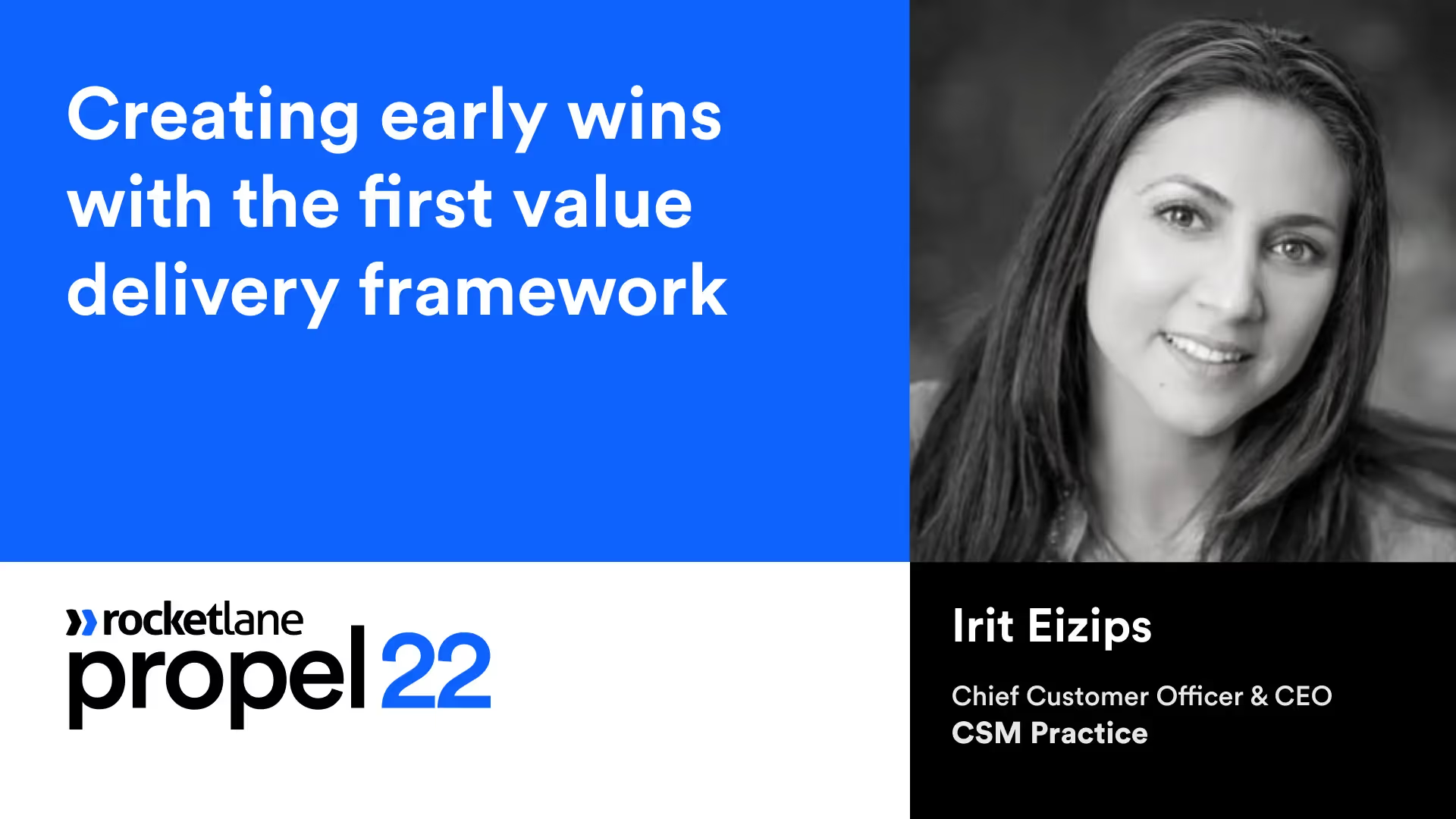
In her Propel22 session, Irit Eizips, CEO of CSM Practice, talked about the First Value Delivery framework and how it can be used to identify quick wins for value delivery. Irit has been a regular among the Top 100 Customer Success Strategists since 2013. She has extensive experience in customer retention, upselling, customer value strategies, and methodologies.
In this session, Irit talked about:
- The most common mistake CS teams make
- Time-to-First-Value and how to identify the right outcomes for it
- Best practices to prioritize the right results for customers
- A handy framework to prioritize the best onboarding outcomes
Here are key takeaways from the session.
Delivering quick wins
A great way to ensure consistently happy customers right from the onboarding phase is to deliver quick wins and not just focus on the big goals.
Delivering quick wins at the onboarding phase will keep your customer engaged and encourage higher usage levels. Done right, this will lead your customers to the maximum value.
The maximum value is rarely achieved because we let the customers decide the outcomes independently.
The First Value Delivery Framework
What will help is adopting a consultative approach and working with them to break their goals down into quick wins and prioritize them.
Once you are confident that you are aware of all of the customer’s use cases, focus on helping them see value quickly.
Irit Eizips’ First Value Delivery Framework can come in handy:

The x-axis is represented by effort in this quadrant, and the y-axis represents impact.
- Quick wins: low effort, low customer impact. These should come second in priority after the home runs
- Home runs: low effort, high customer impact. These help customers perceive value and should be your preferred first value delivery
- Long-term wins: high effort, high customer impact. These shouldn’t be a part of your onboarding goals, as they are realized over the long-term and aren’t first value material
- Nice-to-have: high effort, low customer impact. This could lead to lower adoption rates if prioritized for onboarding. Focus on this later, when the customer has wholly bought into your solution.
Sometimes, ‘Effort’ doesn’t just mean the effort required to implement the product, but also the customer’s effort to manage change in terms of a new process, new tech, etc.
In such cases, you could look at it as process vs. technology. When your system is being implemented, it is brand new to the end-users. Once they have been using it for a while, end-users tend to see it as old. The same holds true for processes.

For users, it is difficult to learn a new process and a new system at the same time. So here’s how you can think of the first value delivered:
- Green zone: Old processes that the users struggle with, which you can simplify with your new system. This is your first value delivered
- Red zone: Introducing new processes that need to be implemented through your new system. You want to avoid this as this may make users feel the onboarding process is tedious, especially if both the process and the tool are complex
- Yellow zone: New processes that can be implemented using existing tools; there’s a minor risk, as it might require a new methodology training
- Quick wins: Old processes that can be simplified using the existing system. This can be prioritized after the first value delivered.
A success plan
Once you’ve assessed your customer’s goals using the aforementioned frameworks, you can come up with a success plan:
- Identify the first value you can deliver
- Consult your customer and come up with a plan: how you want to go about achieving the first value delivered, how many phases you want to break the onboarding process into based on the first value delivered, etc.
- Communicate with the customer on new processes, the training required, etc. Make sure you discuss methodology training, admin training, and product training.
Bonus tip: Make onboarding data visible to the customer and close the gap between onboarding and adoption.
For the full recording, head here.
You might also like
Table of Contents

Regsiter for the live webinar


Great consultants didn't join your team to spend Fridays writing documentation.
Table of contents
18 of Forbes Cloud 100 chose Rocketlane. The best PS teams aren't waiting around.
FAQs













Copyright © 2026 Rocketlane Corp. All rights reserved.


















.webp)