5 things to automate in your client project delivery

•
•
Summarize blog with






With August already upon us, many of us are feeling the pressure to accelerate towards our year-end goals. Finding ways to move faster without sacrificing quality is crucial.
The most significant advantage you can create for your business in the current competitive market is the quality of the experience you offer your clients—through your brand, your product, and your service offerings. However, providing an exceptional customer experience hinges on your team consistently delivering their best work. But what happens when a considerable portion of their time is consumed by follow-ups, updating task statuses, and writing emails to project stakeholders?
But what happens when a considerable portion of their time is consumed by follow-ups, updating task statuses, and writing emails to project stakeholders?
Nothing an optimal workflow can’t fix.
Establishing a seamless workflow may seem daunting, but it doesn't have to be. We’re talking about automations!
What does project automation entail?
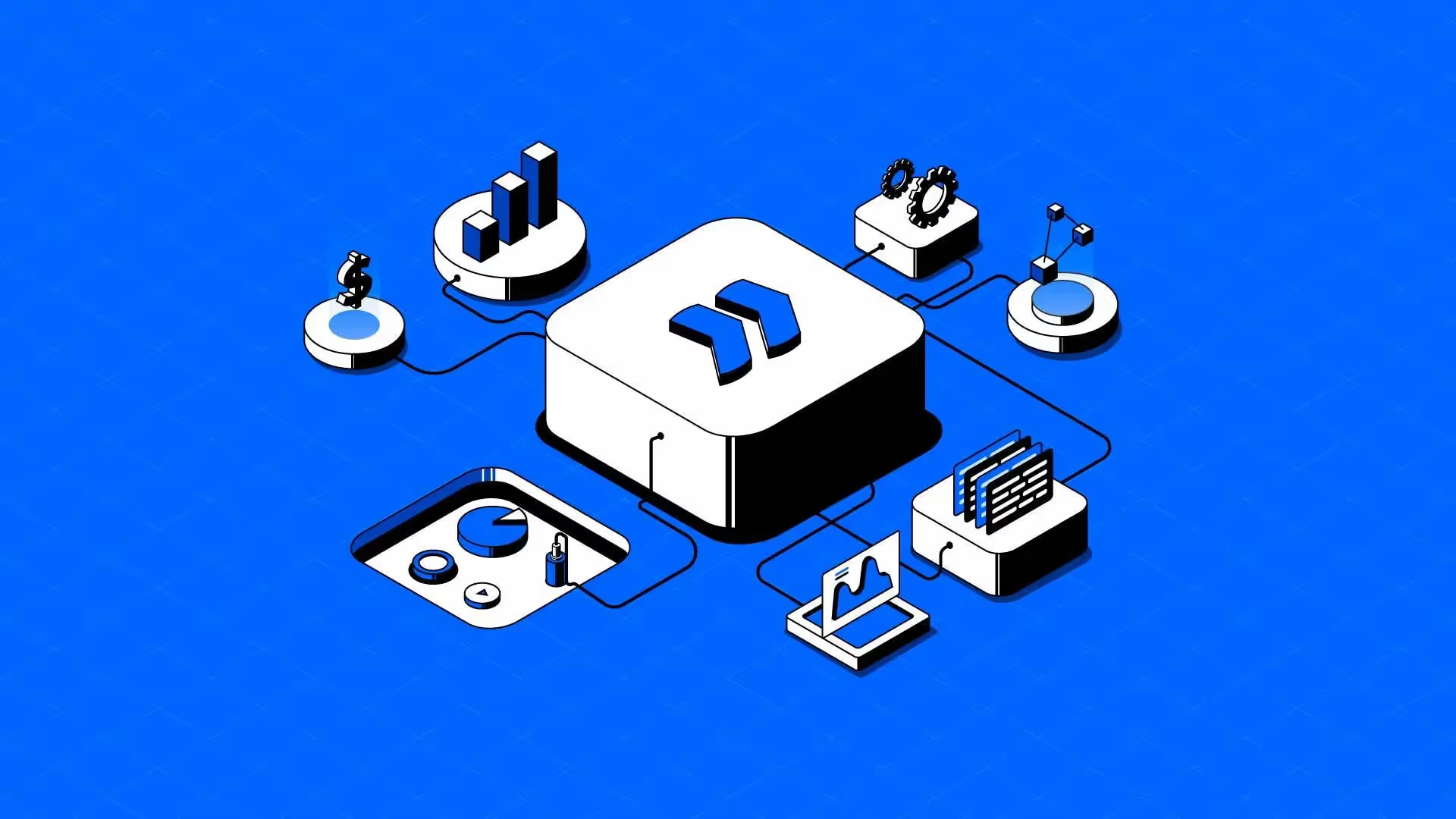
Project automation involves using technology to perform repetitive tasks that are typically handled manually. By integrating various tools and software, you can streamline processes, reduce the risk of human error, and free up your team's time to focus on more strategic activities. Automation can be applied to various aspects of project management, from initial sales handoff to ongoing updates and bottleneck detection, ensuring a smoother, more efficient workflow.
You can simplify your project workflow by focusing on automating your project lifecycle.
How about starting with automating just five things about your project lifecycle?
1. The sales handoff
The sales team is probably going to miss out on passing some information over to you, their priority is winning deals. Your team is probably waiting to kick off that big client project, and can’t wait to start. A recipe for miscommunication and inconsistent documentation. Automating this process ensures no information is lost and your customers aren’t answering the same questions multiple times. Think automated reminders, notifications, CRM integrations, etc.
2. Updating systems
Regularly updating CRM and CS tools is crucial for accurate customer data, informed decision-making, and seamless customer experience. These updates enhance workflow efficiency and facilitate timely client communication. Staying current also ensures compliance with industry standards and protecting customer data.
But doing it manually means there are data inconsistencies, errors, duplications, etc. This means there is no single source of truth, and decisions aren’t being made using accurate data.
Automate this process to eliminate/minimize human error, and to ensure information is current and accurate. This looks like getting your tech stack to exchange information using integrations, APIs, etc.
3. Bottleneck detection
Did an email tackle a critical concern? If a crucial task or checkpoint requires attention, can we implement automation to monitor it?
If a task lingers incomplete for an extended period, can we automate actions to rectify it?
The need for such information highlights the significance of bottleneck detection, which is pivotal in proactively identifying and addressing such issues.
If we’re being honest, this process is not scalable if it is completely dependent on humans. And so, this process is worth automating.
For instance, Rocketlane sends out alerts to stakeholders, triggered based on how long a task has remained incomplete.
4. Go-to-Green Plans
he ‘Go-to-Green’ plan serves as a proactive response to projects slipping into red or amber status, signifying delays or potential
risks. This strategy involves a comprehensive approach, including adjusting deadlines, notifying relevant stakeholders, and meticulously calculating the days impacted.
Automating it takes a huge load of manual work (and anxiety) off your team’s plate. Rocketlane, for example, will notify project owners when their ‘Project health’ field is red. It nudges them to redistribute resources and can also dynamically update timelines based on new dates.
5. Project updates
Creating and sharing project status updates manually can sometimes mean inconsistent communication, information slipping through the cracks, and clients feeling left in the dark. Automating this process ensures visibility and transparency for everyone involved, and less drudgery for your team. This could look like automated emails that contain real-time project progress updates, completion status, and subsequent activities like hypercare.
What aspects of your project delivery process would you automate?
If you found this blog helpful, we recommend you check out our latest guide to automating client project delivery. We've curated 32 processes and phases of a project lifecycle that you can automate today!
{{demo}}
Table of Contents

Regsiter for the live webinar


Great consultants didn't join your team to spend Fridays writing documentation.
Table of contents
18 of Forbes Cloud 100 chose Rocketlane. The best PS teams aren't waiting around.
FAQs













Copyright © 2026 Rocketlane Corp. All rights reserved.



















.webp)